
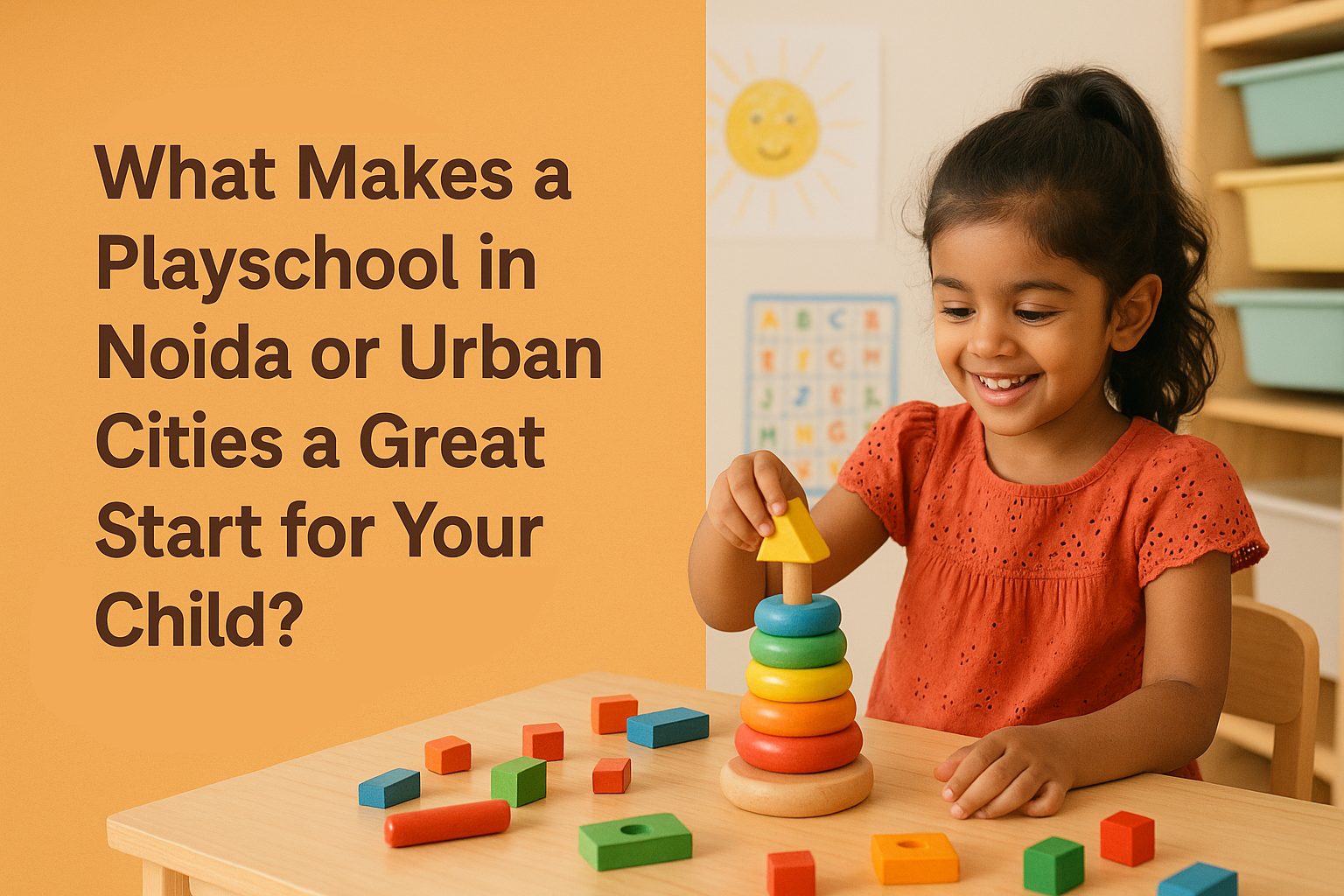
In today’s fast-paced cities, parenting looks a lot different than it did even a decade ago. The comforting chaos of joint families, long hours spent outdoors, and neighborhood friendships have gradually been replaced by apartment living, smaller families, and digital playtime. As urban centers expand and lifestyles shift, one question becomes especially important for parents raising toddlers: Is a playschool in Noida—or any urban city—the right place to begin my child’s educational journey?
Turns out, the answer isn’t just yes—it’s essentially necessary. Let’s explore why.
Why Early Childhood Education Matters More in Urban Settings
In India, only around 30% of children between ages 3 to 6 are enrolled in any kind of pre-primary education. But when we zoom in on cities, this figure climbs to nearly 45%. That says something. Urban parents are increasingly recognizing the need for a structured learning environment before formal schooling begins. (source: devdiscourse)
Why this tilt? Urban childhoods are often missing what smaller towns naturally provide: open spaces, peer play, and intergenerational interaction. For many children in metro cities, playschool becomes their first community—offering peer engagement, emotional development, and physical activities that apartment living may not always allow.
Institutions like UNICEF and NCERT have emphasized that the early years—especially up to age 6—are critical for brain development. In urban settings, where life is scheduled and fast-moving, playschools step in as the much-needed pause button for organic growth.
How a Playschool Supports Cognitive and Emotional Growth
Structure may sound dull to adults, but for toddlers, it’s a comfort zone. Playschools create predictable routines—circle time, snack breaks, storytelling—that offer security and build self-regulation. Research suggests that children with structured days show nearly 25% better emotional control than those without.
Equally important is the kind of learning that happens. At a quality playschool in Noida, activities are not about rote alphabets or numbers. Instead, they are about storytelling circles, play-based puzzles, group music sessions, and roleplay—all of which sharpen memory, problem-solving, and language skills. In fact, studies show that play-based learning improves problem-solving abilities by 30% in early years.
Moreover, in nuclear family setups where social exposure is limited, the classroom becomes a child’s first arena for confidence building. Children who attend urban playschools regularly display stronger articulation skills and social adaptability—skills that stay with them well beyond preschool.
Playschools in Metro Cities: What Makes Them Different?
One of the biggest advantages of urban playschools is access—to both people and pedagogy. Playschools in Noida and similar metro hubs are far more likely to follow globally accepted education models such as Montessori or Reggio Emilia. These aren’t just trends—they’re evidence-backed frameworks that prioritize experiential learning and child-led exploration.
Then there’s the diversity. Urban classrooms often include children from varied cultures, languages, and family backgrounds. This kind of social exposure from a young age fosters tolerance, adaptability, and richer communication skills. In a rapidly globalizing world, that’s no small thing.
Also, in cities where many children are the only child at home, playschool becomes their first social microcosm—a space to negotiate, share, wait their turn, and resolve conflicts, all under watchful guidance.
The Importance of Location and Safety
For working parents juggling Zoom meetings, traffic, and errands, the location of a playschool can make or break daily schedules. This is where a playschool in Noida often gains favor—many are strategically located near office hubs, metro lines, and residential clusters, ensuring minimal disruption to family routines.
But convenience isn’t the only factor. Safety standards in metro playschools are often more stringent, simply because urban parents demand it. Most Noida-based preschools have CCTV-monitored premises, verified entry/exit systems, child-safe furniture, and hygiene protocols in place.
Another underrated feature of city-based playschools? The community it brings. Many schools facilitate parent forums, weekend clubs, and WhatsApp groups that evolve into informal support systems—especially important for first-time parents navigating early childhood.
What to Look for in a Metro City Playschool
Choosing a playschool in a city with dozens of options can feel overwhelming. Here’s what most parents today consider non-negotiable:
- Transparent Communication: 90% of parents want real-time updates and open parent-teacher channels.
- Emotionally Sensitive Staff: 85% prioritize staff who can manage meltdowns with empathy and grace.
- Balanced Curriculum: 80% look for equal weightage on learning, play, and rest—not academics alone.
- Cultural Alignment: 70% want a school whose tone and style of nurturing matches their own parenting values.
These numbers aren’t random—they’re reflective of actual urban parenting patterns where stress, time, and expectations run high. The right playschool in Noida or any similar metro city will check these boxes naturally.
Developing Urban-Ready Children: The Role of Playschools
Urban life is fast, unpredictable, and full of transitions. Playschools, when chosen well, don’t just teach ABCs—they build the emotional muscle needed to cope with urban complexity.
Resilience starts early. From learning to wait for their turn on the slide to dealing with a missing crayon, children begin to understand that challenges can be managed. Early numeracy, beginner STEM kits, and storytelling sessions lay the cognitive base for later academic readiness.
Perhaps most importantly, emotional intelligence—often overlooked—is deeply nurtured in playschools. Recognizing feelings, empathizing with others, and finding words to express frustration are daily lessons in a high-quality preschool setting.
Playschools as a Support System for Urban Parents
Let’s not forget the other side of the story: parents. Playschools don’t just help kids grow—they allow parents to breathe.
Having structured hours where your child is safe, engaged, and learning gives parents the freedom to return to work, manage errands, or simply take a moment to themselves. Regular feedback helps parents track progress and better understand their child’s strengths and areas for development.
Moreover, a good playschool in Noida acts as a bridge to formal schooling. Familiarity with structured classrooms, daily schedules, and peer interaction makes the transition to kindergarten smoother—for both the child and the parents.
Conclusion
In rapidly evolving cities like Noida, early education isn’t just a phase—it’s a foundation. Playschools in metro areas play a crucial role in shaping socially confident, emotionally balanced, and cognitively curious individuals.
And while there are many playschools to choose from, what makes the right one stand out is how deeply it understands the unique context of metro-family life. From communication to curriculum, from staff sensitivity to city safety, the best playschool in Noida offers much more than a head start—it offers a healthy, holistic beginning.
A Note for Parents
If you’re currently exploring options for a playschool in Noida, make sure to visit and observe how a school interacts with its students, how engaged the classrooms are, and how smoothly the systems function. Look beyond glossy brochures. A school that fits your child’s personality and your family’s values will make all the difference.
To explore an award-winning, parent-trusted playschool in Noida, Click here to contact The Little Scholar playschool
It’s not just about where your child starts school—it’s about where they start growing.