
It is a huge step when you send your child to kindergarten. It happens that one day they are at home playing with toys, and the next day they are walking into a classroom among other children, a teacher, and an entire new world of learning. It is thrilling and none too frightening.
The question that is usually raised by parents is what their child will actually do at kindergarten. Will they just play all day? Will they be led too soon to read and write? What does a good kindergarten curriculum entail?
These are fair questions. All parents desire that their child should be happy and learn. The positive news is that a good kindergarten does both. The most optimal programs combine both play and the learning process in a manner that is natural to little children.
Kindergarten: A Real Report
Kindergarten is no longer what it was. It is no longer the times when children simply colored and took naps all afternoon. However, it is not also about forcing five-year-old children to sit at the desks and work with worksheets all the time.
An excellent kindergarten curriculum is in the middle of the line. It is known that in early childhood, kids learn through moving, playing, and engaging their hands. It also realizes that this period is crucial in the development of skills that will be required by the children in the future.
The goal is simple. Assist children in developing in all aspects. Their heads, their bodies, their aptitude to get along with people and their confidence. And all this is only as important as learning letters and numbers.
What Children Learn in Kindergarten.
A proper kindergarten curriculum encompasses a number of areas. Each one matters.
Language and Reading
Here children are taught how to love words and stories. Teachers read out day in day out. They select books containing pictorials and appealing tales. Children listen, they ask questions, they begin to learn about the way stories work.
They also are taught the units of reading. Letter names. Letter sounds. The process of how to grip a book and open up pages. The ability to identify their name. Children will have learned to read simple words at the end of the year. Some will take longer. Both are fine.
It is the trick to make all of this feel like a game, rather than a stressor. Children would like to read more when reading is pleasing.
Writing
Small fingers are yet to be strong. A good program provides those children with numerous opportunities to make use of those hands. They draw pictures. They scribble. They try to write letters. They are taught to write their names.
None of this appears to be perfect in the beginning, and this is fine. It is not the beautiful handwriting. It is aimed at assisting children in realizing that they can get their ideas out of their heads and on paper. That is a powerful feeling.
Math
Kindergarten math is all about learning by doing. Children count things. Real things. Buttons, blocks, snacks. They classify things according to colour or size. They are taught to identify numbers. They begin to comprehend such words as more and less, bigger and smaller.
The patterns are also a large part of kindergarten math. Red block red block blue block blue block. What comes next? This type of play prepares one for more difficult math in the future.
Science and the World around Them
Children of a young age are curious. Why is the sky blue? Where do bugs go in winter? How do plants grow? A good kindergarten curriculum allows these questions to be asked.
Simple science activities are introduced by teachers. Planting the seed and seeing it develop. Seeing butterflies come out of caterpillars. Combining colors to find out what will happen. Discussing seasons and weather. Nothing in this is like science. It is like wandering over the world, and that is what it is supposed to be.
Social and Emotional Learning.
This may be the best section of kindergarten. Children are taught how to interact with other human beings.
They learn to share. They learn to wait their turn. They are taught to use words in situations when they are angry rather than beating or crying. They get to know that other people are not without feelings. They get to know how to find friends and retain them.
All this does not occur automatically. Disagreements lead children through the guidance of teachers. They assist children in labelling their emotions. They develop a classroom where a child feels secure and appreciated. This piece is as significant as is the lesson on letters and numbers.
Physical Development
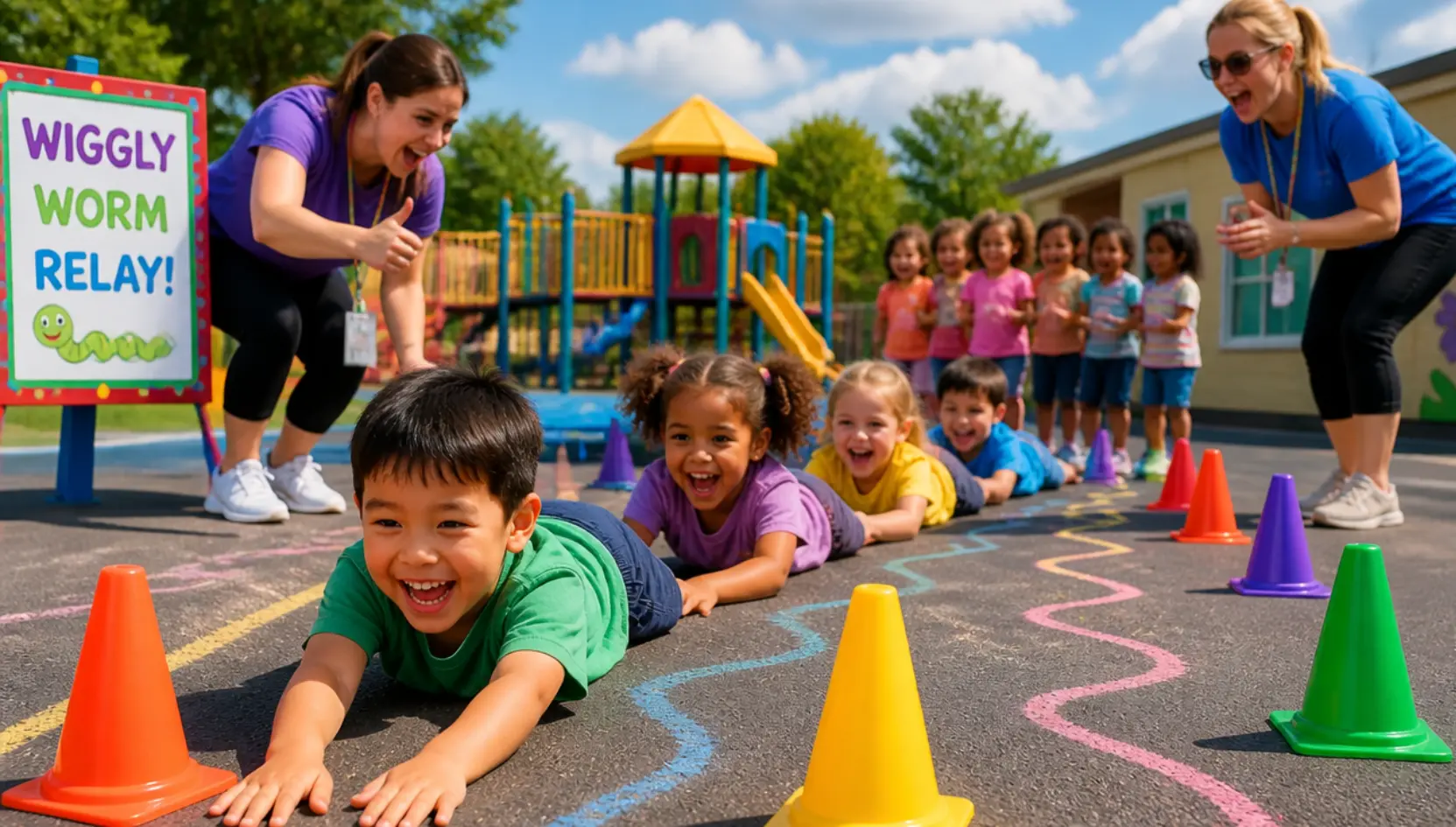
Five-year-olds need to move. Good day will involve enough time running, jumping, climbing, and outdoor play. Fine motor skills matter too. Cutting with scissors. Holding a pencil. Buttoning coats. Opening lunch boxes. These little activities help children to be more autonomous.
What a Good Day Looks Like
Parents are always wondering what their child exactly does on a day-to-day basis. Kindergarten curriculum must be of a kind that works well with young children.
It is a day that begins with everybody. Perhaps morning meeting, or circle time. Children greet each other. They talk about the day. They could sing a song or recite a story. This makes everybody feel like he or she is a member of the group.
Then comes learning time. Not the type that children sit and stare at. The children go through various activities. Others collaborate with the teacher in a small group. Others are checking the learning stations in the room. A math centre that has counting games. A writing office with a sheet of paper and pens. There is a reading corner with comfortable pillows and books.
Then there is the snack time and outdoor play. Children need breaks. They must play and run and be children.
Play followed by additional learning time. Maybe art or music or science. Then lunch, time of rest, and further play.
At the end of the day, they are all back together. A tale, a ballad, a moment of silence before sleep.
This rhythm is successful as it is the way young children learn better. Interrupted spurts of concentration and lots of physical activity and games.
The questions to consider when visiting kindergartens
These are some of the questions to ask in case you are selecting a kindergarten for your child.
What does an average day involve? Listen for balance. Learning time and play time. Group time and time to learn by yourself. Active time and quiet time. What do you do with children who require special attention? Good programs come to the children at their point of need. They do not think that all the children are equal.
How do you handle behavior? Find the solutions to teach social skills as well as focusing on punishing problems.
How do you deal with reading and math? Good responses will discuss practical learning and not worksheets only. What is the number of hours spent by children outside playing? Every day is the right answer. Here comes, rain or shine, with proper clothes. What is your communication with parents like? Significantly, updates are regular. You desire to know the state of your child.
What Matters Most
This is what is special about kindergarten. The curriculum is significant, but there is something even more important. Your child must have the joy of attending school. The students ought to be comfortable with the teacher. They ought to have friends and look forward to seeing them. They must go home with tales to tell, not how they learned something, but who they played with and who made them laugh.
The type of good kindergarten curriculum allows all this. It teaches numbers and letters, yes. Yet it also teaches the children that school is a pleasant place to be. Interestingly, learning exists. They can, and they are intelligent and are appreciated. Those emotions are compared to any worksheet. They influence the attitude of children towards school in the years to come.
A Final Thought
Selecting a kindergarten school is a large task. There is always a concern of wanting to know whether you are doing the right thing. Trust your gut. Visit the school. Observe the way the teachers address children. Observation of whether the children appear to be happy and active. Keep on asking questions until you are comfortable. And keep in mind that you are more familiar with your child than anybody.
The goal is simple. Get a venue where your child can study and develop and be content. Somewhere they can be noticed and considered. A kindergarten place that has a considerate curriculum that knows how little children learn.
Such a kindergarten prepares your kid with all the things that follow. Not only first grade, but a lifetime of fondness for school and studying. That is worth looking for.
FAQ :
A kindergarten curriculum typically includes language and reading, writing, math, science, social-emotional learning, and physical development. These subjects are taught through hands-on activities, play, stories, games, and exploration to make learning engaging for young children.
A well-designed kindergarten curriculum helps children develop early literacy, numeracy, communication, social, and problem-solving skills. It also builds confidence, independence, and a positive attitude toward learning, creating a strong foundation for future academic success.
Play is an essential part of a kindergarten curriculum. A balanced program combines structured learning with free play, outdoor activities, creative exploration, and social interaction. Through play, children develop important cognitive, physical, and emotional skills.
Parents should look for a curriculum that balances academics with play-based learning, supports social and emotional development, encourages creativity, and provides opportunities for physical activity. A good program helps children learn at their own pace while making school a positive experience.