
If you are a parent, you already know this feeling. You watch your child get ready for school each morning and hope they walk through the gates with excitement instead of hesitation. You hope they make new friends, enjoy learning, and return home with happy stories to share. More than anything, you want them to feel safe, confident, and eager to explore.
That journey often begins with the right preschool activities.
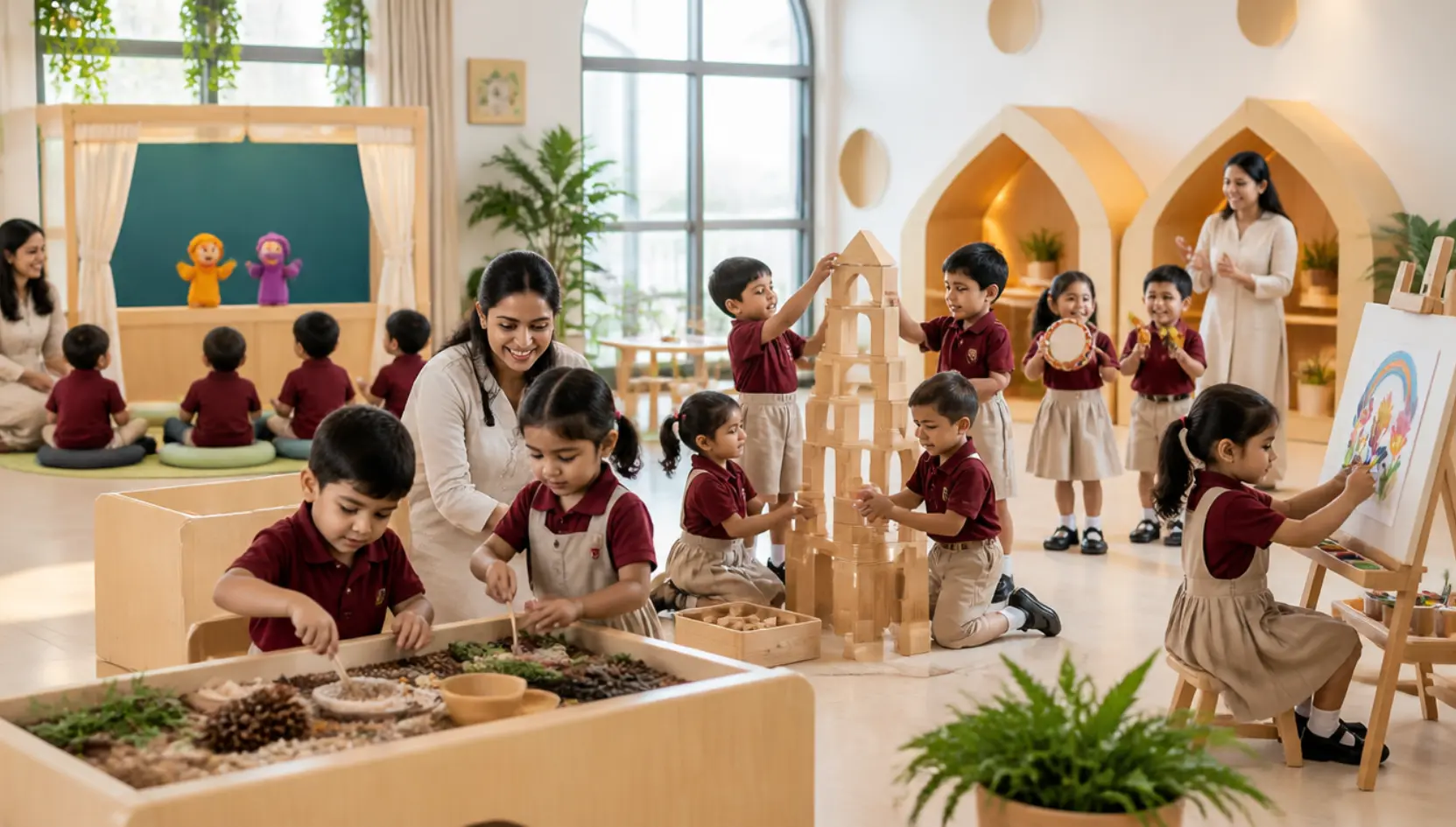
At The Little Scholar, every day is thoughtfully planned to make learning enjoyable. Mornings begin with warm smiles, familiar faces, and comforting routines that help children settle into their day. Some children eagerly rush to their favourite play area, while others take a few quiet moments to observe before joining in. Every child is different, and that is exactly how early learning should be.
Well-designed preschool activities give children the confidence to participate at their own pace. Over time, shy children begin speaking up during circle time, hesitant learners become curious explorers, and every small achievement contributes to a stronger sense of self.
These everyday moments may seem simple, but together they build the foundation for lifelong learning.
The early years of childhood are filled with rapid growth and discovery. Every new experience helps shape how children think, communicate, and interact with the world around them.
Why Preschool Activities Matter
Preschool activities are much more than ways to keep children occupied. They are carefully designed experiences that support cognitive, emotional, social, and physical development through play and exploration.
Something as simple as sorting coloured blocks teaches pattern recognition and logical thinking. Listening to a story develops imagination and language skills. Playing with classmates encourages teamwork, empathy, and communication.
The beauty of these activities is that children rarely realise they are learning. They are simply having fun while developing essential life skills.
Parents often notice subtle but meaningful changes after a few months of preschool:
- Children become more confident in expressing themselves.
- They start making small decisions independently.
- They become better at sharing and cooperating.
- They show greater curiosity about their surroundings.
- They develop routines and responsibilities naturally.
These changes happen gradually through consistent, engaging preschool activities that nurture every aspect of development.
Learning Through Play
Children are naturally curious. They learn by touching, exploring, questioning, and experimenting.
That is why play is one of the most powerful teaching methods in early childhood education.
At The Little Scholar, learning is woven into everyday play. Instead of memorising concepts, children discover them naturally through activities designed around exploration.
Building blocks introduce early engineering and problem-solving.
Puzzle games strengthen logical thinking.
Role-playing activities encourage imagination and communication.
Musical games improve listening skills, coordination, and memory.
Simple science experiments spark curiosity and observation.
When children build a tower that falls, they don’t see failure. They simply try again. Every attempt strengthens resilience, patience, and confidence.
Group play also teaches valuable social skills. Children learn to:
- Wait for their turn
- Share toys and materials
- Solve simple disagreements
- Listen to others
- Work together toward a common goal
These are lessons that stay with them far beyond preschool.
Art Activities for Preschoolers That Encourage Creativity
There is something magical about watching a young child create art.
They choose colours without worrying whether they match. They paint freely without fear of making mistakes. Every brushstroke reflects their imagination.
Art activities for preschoolers provide children with an opportunity to express emotions they may not yet have the words to describe.
At The Little Scholar, art is never about creating a perfect picture.
It is about exploration.
Children enjoy activities such as:
- Finger painting
- Sponge painting
- Nature painting
- Watercolour exploration
- Leaf printing
- Clay modelling
- Paper tearing and collage making
- Colour mixing experiments
These creative experiences help children develop:
Fine Motor Skills
Holding crayons, brushes, scissors, and glue sticks strengthens the small muscles in the hands, preparing children for writing later.
Focus and Concentration
Completing an art project teaches children to stay engaged with a task from beginning to end.
Emotional Expression
Art allows children to communicate feelings in ways that words sometimes cannot.
Confidence
Displaying their artwork and receiving encouragement builds self-esteem and pride in their efforts.
Perhaps most importantly, children learn that creativity has no right or wrong answer.
Craft Activities for Preschoolers That Build Independence
Craft activities for preschoolers combine creativity with practical learning.
Each small project encourages children to follow instructions, solve problems, and complete tasks independently.
Activities may include:
- Folding paper animals
- Creating greeting cards
- Seasonal decorations
- Paper plate crafts
- Cotton ball art
- Stick puppets
- Simple origami
- Recycled material projects
While these projects may appear simple, they teach important developmental skills.
Children practise:
- Hand-eye coordination
- Fine motor control
- Sequencing
- Patience
- Attention to detail
- Creative thinking
Most importantly, they experience the joy of completing something on their own.
That proud smile when a child runs to show their finished craft to a parent or teacher is proof that confidence grows through small accomplishments.
Teachers often connect craft activities to classroom themes, making learning even more meaningful. A lesson about animals becomes an animal mask. A weather discussion turns into a sunshine collage. Festivals inspire colourful decorations that help children understand traditions through hands-on experiences.
Outdoor Preschool Activities That Support Healthy Development
Young children need movement just as much as they need books and classroom learning.
Outdoor preschool activities give children the freedom to explore, move, and build physical confidence.
At The Little Scholar, outdoor play is an essential part of every day.
Children enjoy activities such as:
- Running races
- Obstacle courses
- Ball games
- Nature walks
- Sand play
- Water play
- Gardening
- Balance exercises
Outdoor learning develops:
Physical Fitness
Running, jumping, climbing, and balancing improve strength, coordination, and overall health.
Risk Assessment
Children learn how to take safe risks while building confidence in their physical abilities.
Social Skills
Outdoor games encourage teamwork, communication, and cooperation.
Observation Skills
Nature walks help children notice colours, sounds, textures, insects, and plants, making them more curious about the world.
Fresh air, sunshine, and active movement also contribute to improved mood and better concentration inside the classroom.
Summer Camp Activities for Preschoolers That Keep Learning Alive
Learning should never stop simply because school is on break.
That is why The Little Scholar organises engaging summer camp activities for preschoolers that combine fun with skill development.
Summer camps introduce children to exciting experiences beyond the regular classroom.
Activities may include:
- Dance and movement
- Storytelling sessions
- Puppet shows
- Gardening
- Cooking without fire
- Music and rhythm games
- Nature exploration
- Water play
- Art workshops
- Team games
These camps help children stay socially active while discovering new interests.
Many children also build stronger friendships during summer programmes because the relaxed environment encourages more interaction and collaborative play.
Making Every Day Exciting
Children love routine because it provides security.
They also love surprises because they spark curiosity.
A successful preschool balances both.
At The Little Scholar, no two days feel exactly the same.
One morning may begin with music and movement.
Another may start with storytelling.
Sometimes children arrive to find a surprise sensory activity waiting on their tables.
Other days include science experiments, themed dress-up events, or interactive games.
This variety keeps children motivated and excited about coming to school.
Every activity has a purpose, but it never feels forced.
Children remain engaged because learning feels like an adventure rather than a task.
Teachers Who Inspire Confidence
Behind every meaningful preschool activity is a caring teacher.
Early childhood educators do far more than supervise classrooms.
They observe.
They encourage.
They comfort.
They celebrate every small success.
At The Little Scholar, teachers understand that every child learns differently.
Some children immediately join group activities.
Others need reassurance before participating.
Some learn best through movement.
Others prefer quiet observation first.
Teachers carefully adapt preschool activities to suit each child’s personality and developmental stage.
Their warmth and patience create an environment where children feel emotionally safe enough to explore, ask questions, and make mistakes without fear.
This sense of security is one of the greatest gifts a preschool can offer.
Balancing Structured Learning and Free Exploration
Young children thrive when learning feels natural.
Too much structure can reduce curiosity.
Too little guidance can leave children feeling overwhelmed.
The Little Scholar creates the perfect balance by blending teacher-guided instruction with independent exploration.
Children move through different learning spaces throughout the day:
- Reading corners
- Building stations
- Art tables
- Pretend play areas
- Sensory zones
- Outdoor learning spaces
Each environment encourages children to discover something new while developing different skills.
This balanced approach supports academic readiness while also nurturing creativity, emotional intelligence, and confidence.
Also read : How Preschool Activities Boost Cognitive Development in Toddlers
Preparing Children for a Bright Future
Preschool is not simply preparation for primary school.
It is preparation for life.
The habits children develop during these early years often shape how they approach learning in the future.
When preschool activities are enjoyable, children begin to associate learning with happiness rather than pressure.
They become more willing to ask questions, solve problems, and embrace new challenges.
At The Little Scholar, the goal extends beyond teaching letters and numbers.
The focus is on helping children become:
- Curious learners
- Confident communicators
- Creative thinkers
- Kind classmates
- Independent problem-solvers
- Emotionally resilient individuals
These qualities create a strong foundation for success both inside and outside the classroom.
Conclusion
Every child deserves an environment where learning feels joyful, safe, and meaningful. The right preschool activities do far more than teach academic concepts—they nurture confidence, creativity, independence, and a lifelong love for learning.
Whether it is through imaginative play, engaging art activities for preschoolers, hands-on craft activities for preschoolers, exciting outdoor adventures, or enriching summer camp activities for preschoolers, every experience contributes to a child’s overall growth.
At The Little Scholar, every smile, every question, every new friendship, and every small achievement is celebrated. Because when children are encouraged to explore, create, and learn at their own pace, they don’t just prepare for school—they prepare for a lifetime of curiosity, confidence, and success.
FAQs:
Preschool activities help children develop creativity, communication, problem-solving, social skills, and confidence through hands-on, play-based experiences. They encourage curiosity and build a strong foundation for future learning.
Some of the best preschool activities include storytelling, arts and crafts, building blocks, puzzles, music and movement, outdoor play, sensory activities, and role play. These activities support cognitive, physical, and emotional development while making learning enjoyable.
Preschool activities help children improve attention, language, fine motor skills, teamwork, and independence. By learning through play, children become more confident and ready to adapt to classroom routines and new learning experiences.