

Choosing a kindergarten is an important step in your child’s early education. It is the stage when children begin to take more responsibility for their learning, become comfortable with classroom routines, make new friends, and explore ideas more independently.
At Little Scholar, we understand that children learn best when they feel comfortable, heard, and encouraged. Our kindergarten program brings together age-appropriate learning, creative activities, play, and everyday experiences to help children develop essential skills while enjoying their time at school. We focus on creating a positive learning experience that helps children move towards primary school with greater confidence and curiosity.
Why Kindergarten Matters in a Child’s Early Learning Journey

Kindergarten is an essential time in a child’s education. Children continue to move from the play-based routines of preschool to a more regulated learning setting but still need a lot of opportunity to explore, engage, and learn through doing.
At Little Scholar, we use this stage to help children build skills that they can use inside and outside the classroom. Our kindergarten learning experience gives children opportunities to:
- Develop early literacy and numeracy skills through age-appropriate reading, writing, phonics, counting, patterns, and number activities.
- Strengthen communication by encouraging children to speak, listen, ask questions, share their thoughts, and participate in classroom conversations.
- Become more independent by giving children opportunities to manage simple tasks, make choices, follow instructions, and take responsibility for their belongings.
- Learn through interaction as group activities help children understand sharing, cooperation, turn-taking, and respectful communication.
- Build classroom readiness by becoming familiar with routines, completing activities, and participating confidently in a structured learning environment.
- Prepare for the next stage of school by developing the academic, social, and personal skills children need as they move towards primary education.
At Little Scholar, kindergarten is not about rushing children into formal academics. It is about giving them the right support at the right stage, so they can approach new learning experiences with confidence and curiosity.
The Little Scholar Approach to Kindergarten Learning
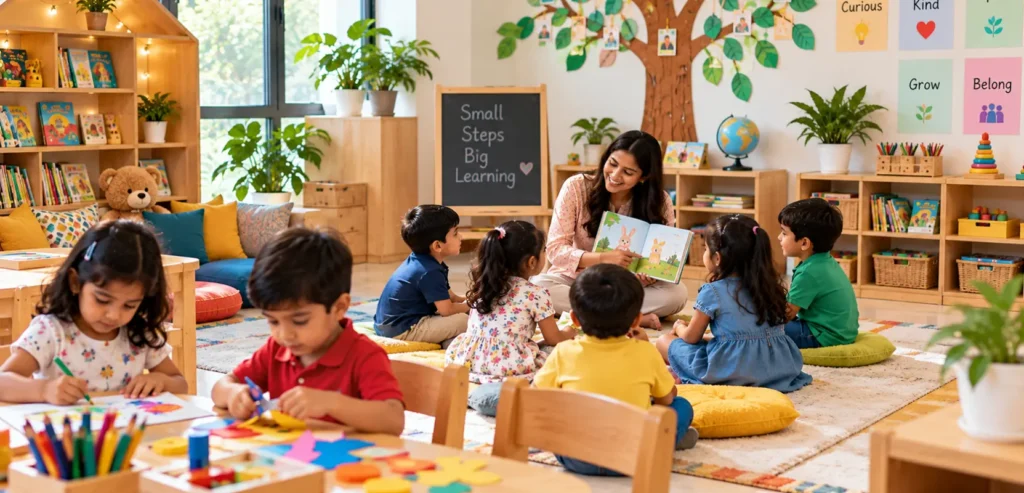
At Little Scholar, kindergarten is a stage where children need both guidance and freedom to learn in their own way. We combine structured classroom experiences with play, creativity, and hands-on activities so that children can understand new concepts without feeling that learning is a task.
How we make kindergarten learning meaningful
- Child-first learning: We consider the needs, interests, and developmental stage of each child while planning learning experiences.
- Learning with a balance: Classroom routines and age-appropriate lessons are combined with play and creative activities to keep children engaged.
- Hands-on experiences: Children explore concepts through games, stories, puzzles, art, activities, and practical experiences rather than depending only on worksheets.
- Encouraging questions: We give children the space to ask questions, share ideas, and take an active part in classroom discussions.
- Respecting individual pace: Every child develops differently, so we provide the guidance and encouragement needed to help children progress comfortably.
- Learning through participation: Group activities, classroom conversations, and collaborative tasks help children become comfortable participating and expressing themselves.
Our focus is to make learning something children look forward to each day. By giving them the right mix of structure, exploration, and support, we help build a strong foundation for the years of schooling ahead.
Age-Appropriate Learning for Growing Minds
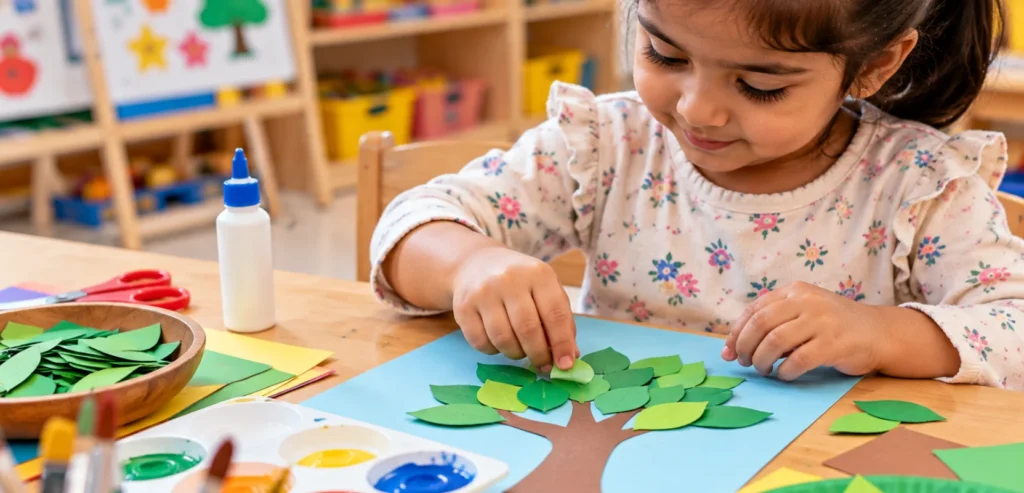
All children learn in different ways at different ages, so kindergarten learning should be appropriate to children’s ages, skills and developing interests. At Little Scholar, we teach new ideas in a way that children can comprehend and enjoy, giving them time to practice, explore, and build confidence as they move forward.
Building essential skills through everyday learning
- Early literacy and phonics: Children become familiar with letters, sounds, words, and early reading skills through stories, rhymes, phonics activities, and classroom conversations.
- Early mathematical thinking: Counting, number recognition, shapes, patterns, sorting, and simple problem-solving activities help children become comfortable with basic mathematical concepts.
- Vocabulary and communication: Regular conversations, storytelling, picture-based activities, and group discussions encourage children to learn new words and express their thoughts clearly.
- Hands-on learning: Children understand concepts better when they can see, touch, create, and experiment. Activities, games, puzzles, and practical tasks help turn classroom ideas into meaningful experiences.
- Learning at the right pace: Concepts are introduced gradually, allowing children enough time to understand and practise before moving to more advanced ideas.
- School-readiness skills: Following routines, listening to instructions, completing age-appropriate tasks, working with classmates, and becoming more independent help children feel prepared for primary school.
At Little Scholar, we focus on making each learning milestone feel achievable and enjoyable. The aim is to help children develop strong foundational skills while keeping their natural curiosity and enthusiasm for learning alive.
Learning Through Play, Creativity, and Exploration

Children are naturally curious. They want to touch, build, ask questions, try things again, and understand how the world around them works. At Little Scholar, we use this natural curiosity as part of the learning process, giving children plenty of opportunities to explore ideas through play, creativity, and hands-on experiences.
Making learning active and enjoyable
- Storytelling and role play: Stories, pretend play, and classroom conversations help children develop language skills while allowing them to explore different ideas and situations.
- Art, music, dance, and craft: Creative activities give children a simple and enjoyable way to express themselves while developing imagination and fine motor skills.
- Puzzles, blocks, and learning games: These activities encourage children to observe, think, make choices, and find solutions through play.
- Sensory experiences: Age-appropriate sensory activities allow children to explore different textures, shapes, materials, and objects while learning through their senses.
- Learning by doing: Instead of only listening to an explanation, children get opportunities to create, experiment, and discover concepts through practical activities.
- Outdoor and movement-based learning: Running, jumping, balancing, and structured outdoor games support physical development while encouraging coordination, participation, and teamwork.
At Little Scholar, we want children to enjoy the process of learning. When a child is given the freedom to explore and the encouragement to try, even a simple activity can become an opportunity to learn something new.
Building Confidence, Communication, and Social Skills
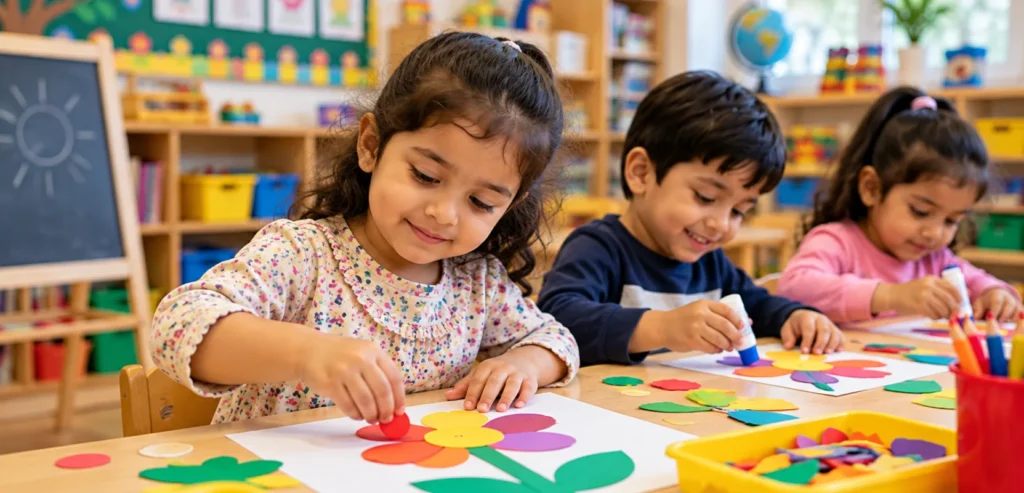
Kindergarten is also a time when children begin to understand how to communicate their thoughts, interact with others, and become more comfortable in a group setting. At Little Scholar, we give children regular opportunities to participate, express themselves, and learn from the people around them.
Helping children become confident in everyday interactions
- Encouraging communication: Classroom conversations, storytelling, show-and-tell, and group discussions give children opportunities to speak, listen, and share their ideas.
- Learning to work together: Group activities and classroom projects help children understand cooperation, teamwork, and the importance of contributing to a shared activity.
- Practicing social skills: Children learn to share materials, take turns, listen to their classmates, and respect different ideas and feelings.
- Supporting emotional growth: Everyday classroom interactions help children recognise their emotions, understand others, and respond to situations in positive ways.
- Developing problem-solving skills: Age-appropriate games and activities encourage children to think about different solutions, make simple decisions, and try again when something does not work.
- Encouraging participation: Classroom presentations, celebrations, performances, and special activities give children a chance to participate in front of others and become more comfortable expressing themselves.
We believe confidence grows gradually. With encouragement, patience, and regular opportunities to participate, children become more comfortable sharing their ideas and taking an active role in their learning.
A Safe and Supportive Environment for Kindergarten Children
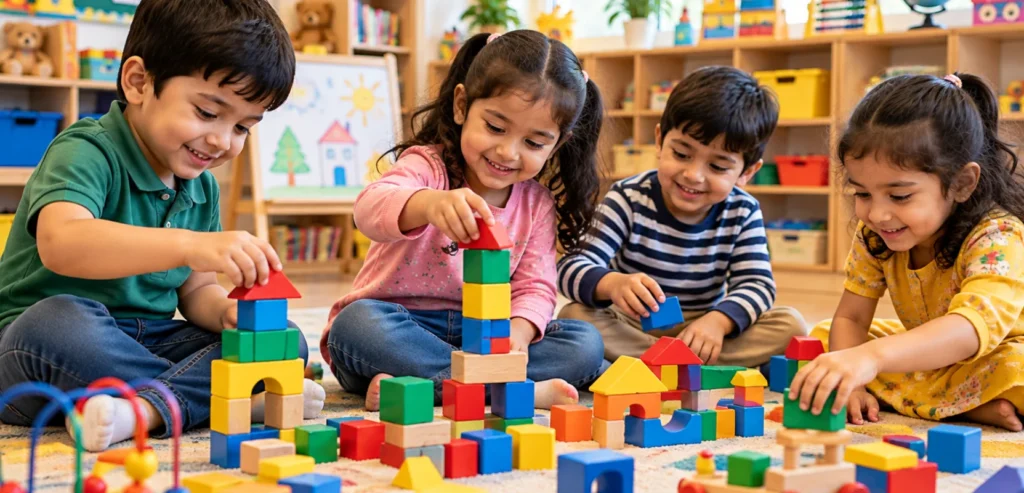
A child’s surroundings can make a real difference to how comfortable they feel at school. At Little Scholar, we pay attention to the everyday details that help children settle into their routine, interact freely, and take part in learning without hesitation. Our kindergarten spaces are planned to be welcoming, practical, and suited to the needs of young learners.
Creating a comfortable place to learn and grow
- Bright and welcoming classrooms: Child-friendly classrooms give children a comfortable space to learn, interact, and take part in activities throughout the day.
- Safe and hygienic spaces: Clean, well-maintained learning areas help create a healthy environment where children can spend their school hours comfortably.
- Indoor and outdoor play: A mix of classroom activities and play opportunities gives children time to stay active, explore, and develop physical coordination.
- Caring teacher support: Our teachers guide children through daily routines, activities, and new experiences while giving them the encouragement they need.
- Regular parent communication: Keeping parents informed about their child’s participation, progress, and classroom experience helps build a positive connection between home and school.
- A positive learning atmosphere: When children feel comfortable and supported, they are more willing to ask questions, participate in activities, and try something new.
At Little Scholar, we want kindergarten to feel like a place where children can settle in naturally and enjoy being themselves. A caring environment, supportive teachers, and meaningful daily experiences come together to help children feel ready to learn and grow.
FAQs
Kindergarten is generally suitable for children around 4 to 6 years, depending on the school’s admission criteria.
Children develop early literacy, numeracy, communication, social skills, creativity, and independence through age-appropriate activities.
Little Scholar combines structured learning, play, creative activities, and hands-on experiences to support confident and school-ready learners.