
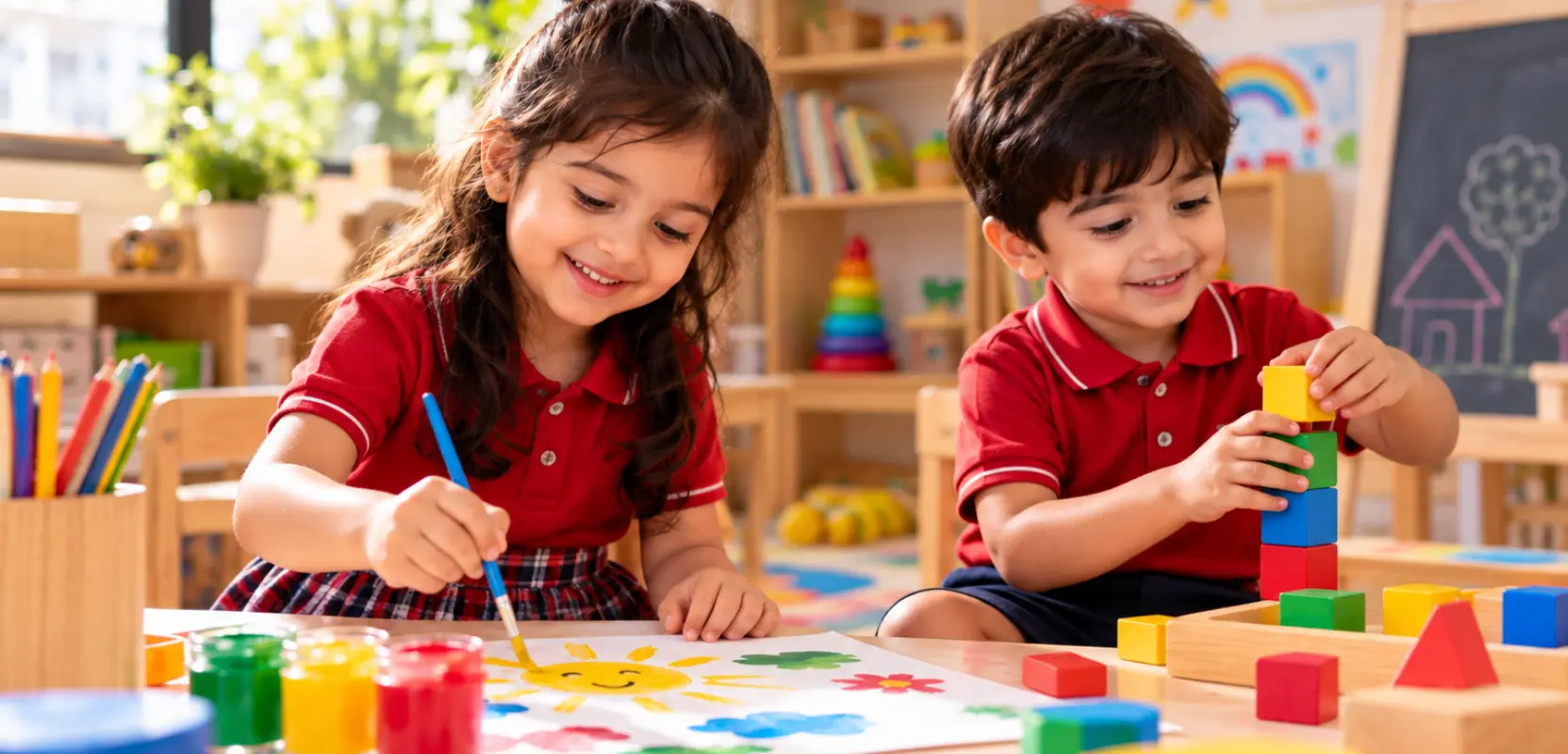
The first years of a child’s living are a period of unbelievable growth, wonder, and discovery. During this form, kids begin to develop the skills they will habitat during their life, from communicating and problem solving to social interaction and emotional saying.Early Childhood Learning plays an important role in providing children with meaningful experiences that support this development.
Learning to endure at an office or remember information should not be a matter of childhood. Children learn by playing, asking interrogations, researching their environment, interacting with others and tasting raw things. A supportive learning environs, combined with geezerhood-appropriate actions, can make this experience measurable and useful.
Why Early Childhood Learning Matters for Every Child
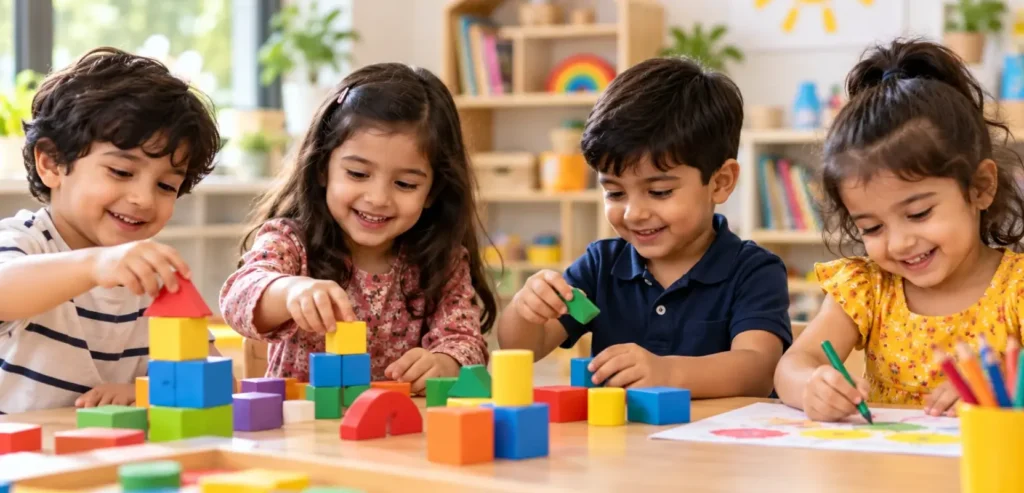
Early Childhood Learning provides children with a foundation for their future educational and personal development. It introduces them to new ideas while helping them understand how to communicate, interact, explore, and solve simple problems.
At this stage, kids simultaneously develop different sciences. Simple action such as progressing with blocks can, for example, promote creativeness, improve script-eye coordination, preface canonical mathematical constructs and teach children how to solve problems.
Some important areas supported by early learning include:
| Development Area | What Children Can Develop |
| Cognitive Development | Thinking, memory, reasoning, and problem-solving |
| Language Development | Vocabulary, listening, speaking, and communication |
| Social Development | Sharing, cooperation, teamwork, and friendship |
| Emotional Development | Confidence, self-expression, patience, and emotional awareness |
| Physical Development | Balance, coordination, movement, and motor skills |
| Creative Development | Imagination, creativity, artistic expression, and curiosity |
Early learning is therefore not only On the grooming of children for school. It is a question of serving them to build confidence and skills needed to understand and interact with the world around them.
Fun Early Childhood Learning Activities for Young Minds
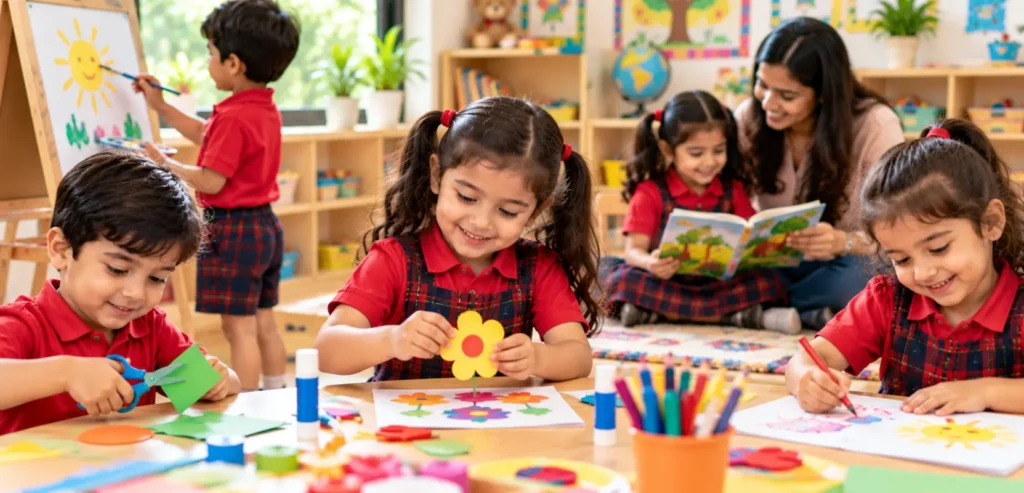
Children are naturally curious, and Early Childhood Learning Activities can turn that curiosity into valuable learning experiences. The best activities are usually simple, interactive, and appropriate for a child’s age and developmental stage.
Storytelling and Picture Books
Storytelling introduces kids into new intelligence, ideas, characters, and situations. Asking elementary questions about a story can also further kids to think, remember details and extract their opinions..
Art and Craft
Drawing, colouring, painting, cutting, and making simple problems, permitting kids to express themselves creatively. These activities can also help to prepare fine motor sciences and hand-eye coordination.
Building and Sorting Games
Building blocks, puzzles, shape sorting, and matching games encourage children to observe, compare, organise, and solve problems. They can also introduce early concepts related to numbers, shapes, sizes, and patterns.
Music and Movement
Songs, dances, gossip about beats and participation in medicine games can make learning more industries and gratifying. Musical activities can also promote hearing, coordination, remembering, and self-expression.
Nature and Exploration
Simple outdoor activities can make children cognizant of plants, animals, colours, grains, weather conditions and their milieu. Encouraging kids to ask questions about what they see can develop wonder and observational abilities.
The key is not to make every activity feel like a lesson. When children are interested and actively involved, learning can happen naturally.
Creating a Positive Early Childhood Learning Environment
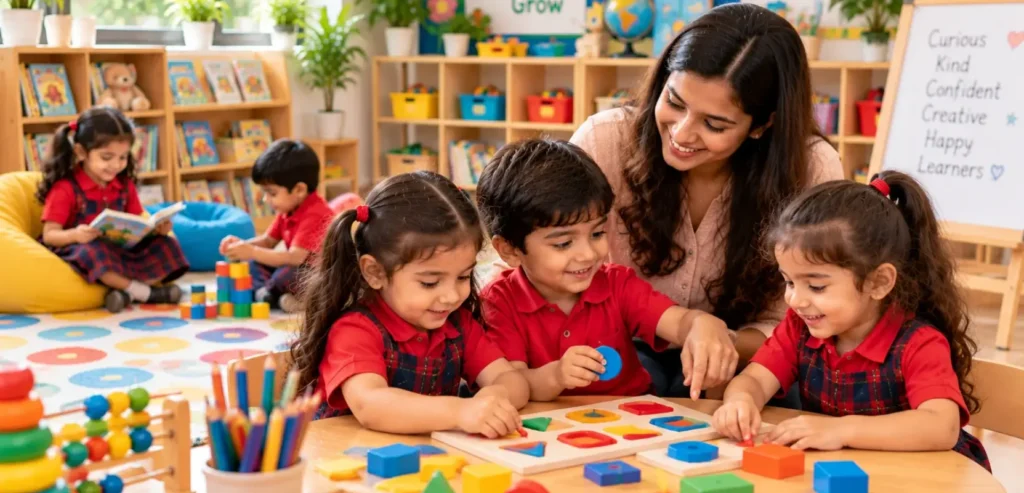
A good Early Childhood Learning Environment should make children feel safe, comfortable, encouraged, and curious. The physical space is important, but the emotional environment is equally valuable.
A positive learning environment can include:
- Safe and age-appropriate learning materials
- Opportunities for individual and group activities
- Books, puzzles, toys, and creative resources
- Space for movement and physical play
- Opportunities for children to ask questions
- Positive encouragement from adults
- A predictable and welcoming daily routine
- Freedom to explore within safe boundaries
Children also need to feel comfortable making mistakes. Instead of expecting every activity to be completed perfectly, adults can encourage children to try, experiment, and learn from their experiences.
For example, if a child fights for a whodunit, he, or she can end his or her acquisition to give the solution immediately. Head. Which way could fit here?. Encourages the child to suppose independently..
A positive environment should therefore focus on encouragement rather than pressure.
How Play-Based Learning Supports Child Development
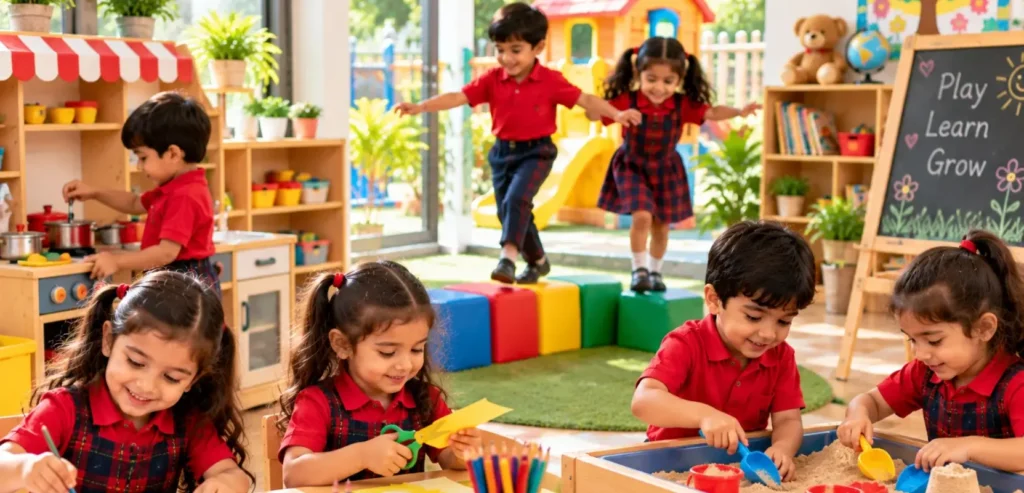
Play is one of the most natural ways children learn. Through play, children can experiment with ideas, practise communication, develop physical skills, and understand social situations.
Different types of play can support different areas of development:
| Type of Play | Examples | Skills Supported |
| Creative Play | Drawing, painting, crafts | Creativity and imagination |
| Physical Play | Running, jumping, movement games | Coordination and motor skills |
| Pretend Play | Role-playing, toy kitchens, shops | Communication and social skills |
| Constructive Play | Blocks, building sets, puzzles | Problem-solving and planning |
| Sensory Play | Sand, water, textures | Exploration and observation |
| Group Play | Team games and activities | Cooperation and social interaction |
Play also gives children opportunities to make choices. They may decide what to build, which colour to use, how to solve a problem, or which role to take during pretend play.
These small decisions can help children become more independent and confident.
Most importantly, play makes learning enjoyable. When children enjoy an experience, they are more likely to participate actively and remain curious.
Building Social, Emotional and Communication Skills Through Play
Early childhood is also an important time for developing relationships and learning how to interact with others. Children gradually learn how to share, cooperate, communicate their feelings, listen to others, and manage everyday disagreements.
Group activities can provide opportunities to practise these skills in a natural way.
For example, a simple group game can teach children to:
- Wait for their turn
- Follow simple instructions
- Listen to others
- Share materials
- Work together
- Celebrate others’ achievements
- Express their thoughts and feelings
Pretend play can be particularly useful for communication. When children pretend to be teachers, doctors, shopkeepers, parents, or other characters, they practise conversations and explore different social situations.
Emotional development is also important. Children may not always have the words to explain how they feel. Adults can help by naming emotions and encouraging children to talk about them.
Instead of simply saying, “Don’t be upset,” an adult might say, “I can see that you’re frustrated because the tower fell down. Would you like to try building it again?”
This approach helps children understand their emotions while learning healthy ways to respond to challenges.
How Parents and Teachers Can Make Early Learning More Meaningful
Parents and teachers have an important role in making Early Childhood Learning engaging and supportive. Children do not need complicated lessons or expensive resources to learn effectively. Everyday experiences can become valuable learning opportunities.
Encourage Questions
Kids often ask why, how, and what, because they try to close the world. Instead of reject of these matters, adults can be curious by asking children what they think.
Give Children Opportunities to Explore
Allowing children to choose between actions, experiment with textiles or find self-management resolutions can help build confidence and decisiveness-constructing capacity.
Read Together
Reading stories regularly can support vocabulary, listening skills, imagination, and communication. Parents can ask children what they think will happen next or how a character might feel.
Make Everyday Activities Educational
Simple activities such as cooking, shopping, cleaning, gardening, or organising toys can introduce concepts such as counting, sorting, colours, shapes, responsibility, and following instructions.
Focus on Progress
Each kid grows on his own farm. Permitting children to get an idea of how they can be treated can put press on them. Instead, groups can recognise private progression and encourage babies to continue their efforts.
Create Time for Unstructured Play
There is no need to plan every bit. Giving children time to play several, provides them to exploit their imagination, make determinations and create their own games and stories.
Building a Strong Foundation Through Early Childhood Learning
Early Childhood Learning is about much more than introducing children to letters and numbers. It is about creating experiences that help young minds become curious, confident, creative, communicative, and ready to explore the world.
Through Early Childhood Learning Activities, children can develop cognitive, physical, social, emotional, and creative skills in enjoyable ways. At the same time, a positive Early Childhood Learning Environment can give children the safety and encouragement they need to experiment, make mistakes, ask questions, and keep learning.
When parents and teachers work together to make learning playful, supportive, and meaningful, everyday experiences can become opportunities for growth. After all, childhood is not simply preparation for the future—it is an important stage of learning, discovery, and development in s itself.
FAQs
Early Childhood Learning refers to the learning and development that takes place during a child’s early years. It includes cognitive, language, social, emotional, physical, and creative development through activities, play, exploration, and everyday experiences
Some effective Early Childhood Learning Activities include storytelling, drawing, colouring, puzzles, building blocks, music, dance, pretend play, outdoor games, sorting activities, and simple nature-based exploration. These activities can make learning enjoyable while supporting different areas of child development.
A good Early Childhood Learning Environment should be safe, welcoming, engaging, and suitable for children’s developmental needs. It should provide opportunities for play, creativity, exploration, communication, physical activity, and interaction with other children and adults.