
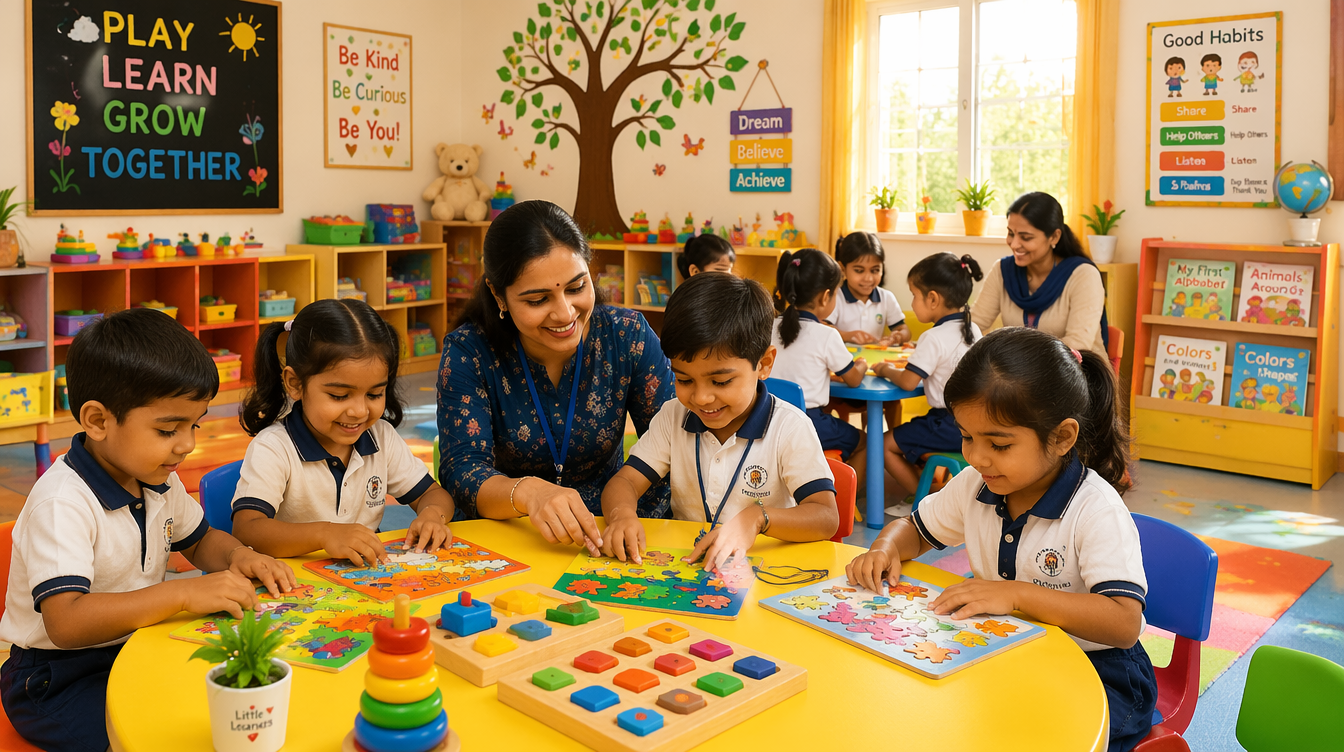
Every smile, every question, and every new experience plays a role in shaping a child’s future. The early years of life are a period of rapid growth, where children absorb knowledge, develop habits, and build the skills they will carry throughout their lives. Among the many milestones during this stage, pre nursery education stands out as one of the most important.
Pre nursery is often a child’s first experience outside the comfort of home. It introduces them to a structured yet nurturing environment where learning happens naturally through play, exploration, and interaction. More than just preparing children for primary school, pre nursery education helps them become confident, curious, independent, and socially aware individuals.
Parents often wonder whether enrolling their child in a pre nursery program is necessary. While every child develops at their own pace, a quality pre nursery provides experiences that are difficult to replicate at home. It lays the foundation for academic success while supporting emotional, physical, social, and creative development.
Let’s explore the many reasons why pre nursery education is one of the best investments you can make in your child’s future.
What Is Pre Nursery Education?
Pre nursery education is designed for children between the ages of two and four years. At this stage, learning is not centered around textbooks or examinations. Instead, children learn through storytelling, songs, games, art, movement, role play, and hands-on activities.
The goal is to create a safe, engaging environment where children develop essential life skills while enjoying the learning process. Every activity is carefully planned to encourage curiosity, creativity, communication, and confidence.
Rather than focusing solely on academics, pre nursery education nurtures the whole child.
1. Gives Children an Early Academic Advantage
The journey toward formal education begins in pre nursery. Children are introduced to basic concepts such as:
- Letters and sounds
- Numbers and counting
- Colors and shapes
- Patterns and matching
- Vocabulary building
These concepts are taught through fun and engaging methods rather than memorization. Storybooks, educational games, songs, puzzles, and interactive activities make learning enjoyable.
By the time children move to nursery or kindergarten, they are already familiar with classroom routines and basic academic concepts, making the transition smoother and less overwhelming.
2. Builds Strong Social Skills
For many children, pre nursery is the first opportunity to regularly interact with peers outside their family.
Through group activities and cooperative play, children learn important social skills such as:
- Sharing toys
- Taking turns
- Working together
- Listening to others
- Respecting differences
- Making friends
These everyday interactions teach children how to communicate, cooperate, and build healthy relationships.
Strong social skills developed during early childhood continue to benefit children throughout school and later in life.
3. Encourages Independence
One of the biggest milestones during early childhood is learning to do things independently.
In a pre nursery classroom, children gradually begin to:
- Put away their belongings
- Wash their hands independently
- Eat snacks responsibly
- Choose activities
- Follow simple routines
- Make small decisions
Completing these everyday tasks gives children a sense of achievement and builds confidence.
Instead of depending on adults for every task, they begin believing in their own abilities.
4. Supports Emotional Development
Young children experience many emotions but often struggle to understand or express them.
A nurturing pre nursery environment helps children:
- Recognize different emotions
- Express feelings appropriately
- Manage frustration
- Develop patience
- Build empathy
- Feel secure in new situations
Experienced teachers guide children through everyday challenges with encouragement and understanding.
Learning emotional regulation at an early age contributes to healthier relationships and greater resilience later in life.
5. Improves Communication Skills
Language develops rapidly during the preschool years.
Children in pre nursery are constantly encouraged to communicate through:
- Storytelling
- Singing rhymes
- Classroom discussions
- Role-playing
- Conversations with teachers
- Group activities
As they interact with adults and classmates, they naturally expand their vocabulary and improve sentence formation.
Good communication skills also increase confidence, making children more comfortable expressing ideas and asking questions.
6. Develops Creativity and Imagination
Creativity is one of the most valuable skills children can develop.
Pre nursery classrooms encourage creative thinking through activities like:
- Drawing
- Painting
- Craft projects
- Music
- Dance
- Pretend play
- Story creation
Rather than focusing on perfect outcomes, children are encouraged to explore ideas freely.
Creative experiences help children become flexible thinkers and confident problem-solvers.
7. Strengthens Fine and Gross Motor Skills
Physical development is equally important during the early years.
Children participate in activities that improve fine motor skills, including:
- Coloring
- Cutting paper
- Building blocks
- Threading beads
- Solving puzzles
Gross motor development is supported through:
- Outdoor play
- Running
- Jumping
- Dancing
- Climbing
- Ball games
These activities improve coordination, balance, strength, and body awareness while preparing children for future tasks like writing and sports.
8. Introduces Structured Learning
Home offers comfort and flexibility, but school introduces routine.
Pre nursery gently familiarizes children with structured schedules that include:
- Circle time
- Learning activities
- Snack time
- Outdoor play
- Story sessions
- Rest time
Following routines helps children develop discipline, responsibility, and time awareness.
This structured environment makes the transition to primary school much easier.
9. Makes Learning Fun Through Play
Children learn best when they are actively involved.
Play-based learning is at the heart of pre nursery education because it allows children to:
- Explore new ideas
- Solve simple problems
- Develop curiosity
- Learn through experimentation
- Build confidence
Whether they are pretending to run a grocery store, building towers with blocks, or playing with sand and water, children are constantly learning.
Play transforms education into an enjoyable experience instead of a stressful one.
10. Identifies Learning Needs Early
Every child develops differently.
One advantage of pre nursery is that trained teachers observe children’s progress daily.
They can identify early signs of:
- Speech delays
- Communication challenges
- Motor skill difficulties
- Learning differences
- Social development concerns
Early identification allows parents and educators to provide timely support, helping children overcome challenges before they become bigger obstacles.
11. Sparks Natural Curiosity
Young children are naturally curious.
They constantly ask questions such as:
- Why is the sky blue?
- Where do butterflies come from?
- How do plants grow?
A quality pre nursery encourages these questions rather than dismissing them.
Teachers create learning experiences around children’s interests, helping them investigate, observe, and discover.
For example, spotting a butterfly in the school garden can become a lesson about insects, colors, plants, and nature.
Curiosity is the driving force behind lifelong learning.
12. Teaches Responsibility and Self-Care
Children gradually learn that they are capable of caring for themselves and helping others.
Simple classroom responsibilities include:
- Cleaning up toys
- Organizing books
- Watering plants
- Feeding classroom pets
- Arranging learning materials
- Keeping personal belongings in designated spaces
These everyday tasks build responsibility while teaching children the importance of teamwork and respect for shared spaces.
They also develop healthy habits such as washing hands, maintaining cleanliness, and following safety rules.
Encourages Confidence in New Environments
Entering school for the first time can feel overwhelming.
Pre nursery provides a warm and welcoming environment where children gradually become comfortable being away from home.
As they successfully complete activities, interact with teachers, and make new friends, their confidence grows naturally.
This emotional security helps them approach future learning experiences with enthusiasm rather than fear.
Develops Listening and Attention Skills
Listening is an important part of learning.
During stories, songs, and classroom discussions, children practice:
- Paying attention
- Following instructions
- Waiting patiently
- Responding thoughtfully
These skills improve concentration and prepare children for more advanced classroom learning.
Promotes Healthy Habits
Good habits are easier to develop during early childhood.
Pre nursery reinforces routines such as:
- Washing hands
- Eating healthy snacks
- Staying hydrated
- Cleaning up after activities
- Respecting personal space
- Following classroom rules
These habits contribute to children’s overall health and well-being.
Builds a Love for Learning
Perhaps the greatest gift of pre nursery education is helping children enjoy learning.
When learning is associated with fun, friendship, creativity, and discovery, children become eager to attend school each day.
Instead of viewing education as a series of tasks, they develop a lifelong curiosity and enthusiasm for exploring the world around them.
Also read: The Significance of a Good Day Care Center to Early Childhood Development
Why Parents Should Consider Pre Nursery Education
Choosing the right pre nursery means giving your child opportunities to grow academically, socially, emotionally, and physically in a safe and supportive environment.
Children benefit from:
- Experienced and caring teachers
- Interactive learning experiences
- Safe and stimulating classrooms
- Age-appropriate activities
- Positive peer interactions
- Daily routines that build confidence
These experiences prepare children not only for primary school but also for life.
Conclusion
The early years are often called the foundation years—and for good reason. Everything children experience during this stage influences how they think, learn, communicate, and interact with the world around them.
Pre nursery education is far more than an introduction to school. It is where children discover their abilities, build friendships, learn independence, develop confidence, and begin their lifelong journey of learning.
By choosing a nurturing and engaging pre nursery environment, parents provide children with the tools they need to succeed academically while growing into kind, curious, creative, and resilient individuals.
A strong beginning creates endless possibilities, and pre nursery education offers children exactly that—a joyful start toward a bright future.
FAQs:
Pre nursery education is the first stage of formal learning for young children. It focuses on developing communication, motor, cognitive, and social skills through fun, age-appropriate activities.
Pre nursery education helps children become confident, independent, and socially active. It also introduces them to structured learning while encouraging creativity, curiosity, and problem-solving skills.
Children learn through play-based activities, storytelling, music, art, rhymes, basic language and number concepts, group activities, and hands-on experiences that support their overall development.