
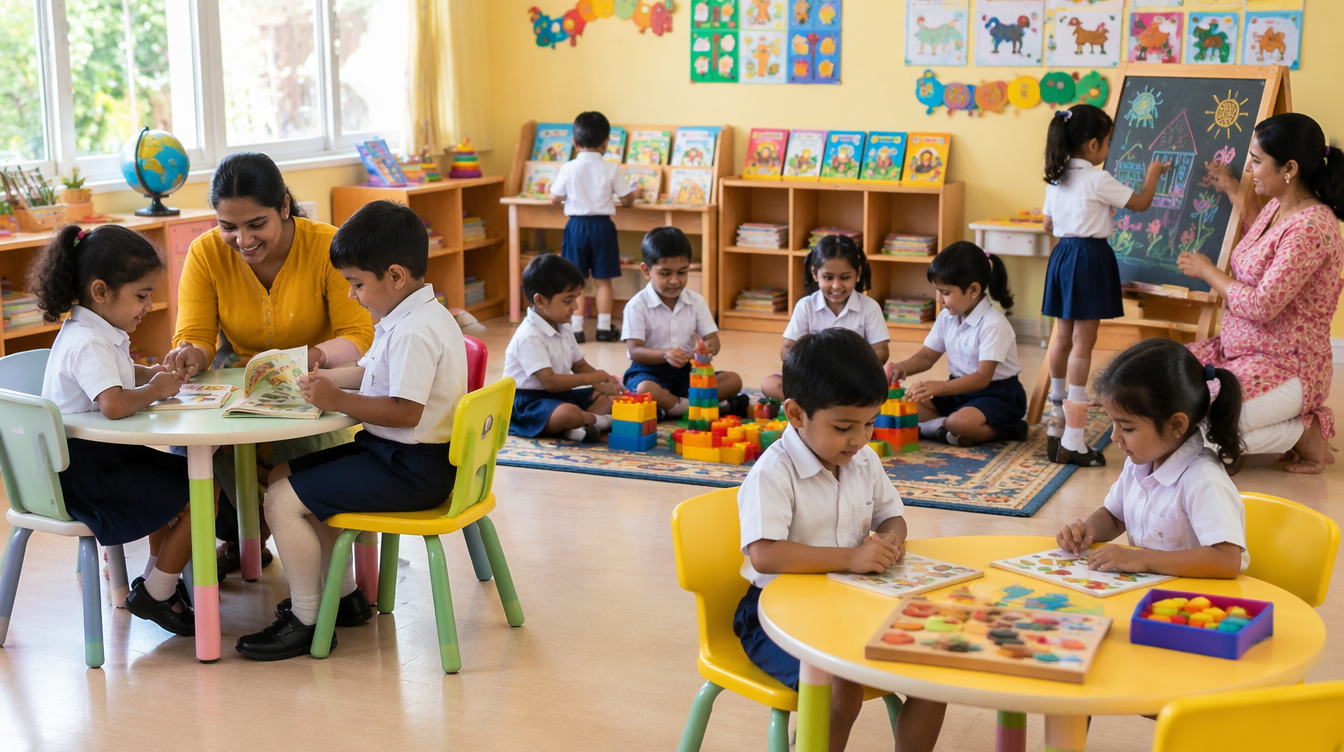
Searching for a “nursery school near me” is one of the first and most important steps parents take when planning their child’s educational journey. While a quick online search may show dozens of nearby options, choosing the right nursery school requires much more than selecting the closest one.
A nursery school is where children experience their first structured learning environment outside the comfort of home. It is the place where they make their first friends, learn to share, build confidence, develop independence, and begin discovering the world around them. These early experiences have a lasting impact on their academic, social, emotional, and physical development.
Every parent wants their child to learn in an environment that is safe, nurturing, engaging, and inspiring. The right nursery school not only introduces children to academics but also helps them develop life skills that prepare them for future success.
In this guide, we’ll explain why choosing the right nursery school matters and discuss the key factors every parent should consider before making this important decision.
Why Choosing the Right Nursery School Matters
The early childhood years are often referred to as the foundation years because they shape a child’s personality, learning habits, and emotional well-being. A quality nursery school supports every aspect of a child’s growth, making the transition into formal education smoother and more enjoyable.
Here are some of the biggest benefits of enrolling your child in the right nursery school.
1. Builds a Strong Educational Foundation
Nursery school introduces children to learning in a fun and engaging way. Unlike traditional classrooms that rely heavily on textbooks, nursery schools use play-based learning methods to teach essential concepts.
Children gradually become familiar with:
- Alphabets and phonics
- Numbers and counting
- Colors and shapes
- Simple vocabulary
- Storytelling
- Rhymes and songs
Learning happens naturally through games, puzzles, creative activities, and interactive sessions.
This early exposure develops curiosity and prepares children for higher levels of education without putting unnecessary pressure on them.
2. Encourages Social Development
Many children spend their early years surrounded mainly by family members.
Nursery school gives them the opportunity to interact with children of their own age.
Daily classroom activities teach children how to:
- Share toys
- Take turns
- Cooperate with others
- Respect different opinions
- Build friendships
- Resolve small conflicts peacefully
These social skills help children become more confident and emotionally secure.
The friendships formed during nursery often become children’s first meaningful relationships outside their families.
3. Supports Emotional Growth
Starting school can feel overwhelming for both children and parents.
A caring nursery school provides a warm and welcoming environment where children feel safe exploring new experiences.
Teachers help children learn how to:
- Express their emotions
- Handle disappointment
- Build self-confidence
- Develop patience
- Adapt to new situations
Over time, children become more emotionally resilient and comfortable in unfamiliar environments.
These emotional skills continue benefiting them throughout their academic journey.
4. Fosters Creativity and Imagination
Young children have incredible imaginations.
A good nursery school encourages creativity through activities such as:
- Painting
- Drawing
- Music
- Dance
- Storytelling
- Clay modeling
- Pretend play
- Craft projects
Creative activities allow children to think independently, express themselves freely, and develop problem-solving abilities.
Rather than focusing on perfect results, children learn that exploring ideas is part of the learning process.
5. Promotes Curiosity and a Love for Learning
Children are naturally curious.
They ask questions, explore their surroundings, and constantly want to discover something new.
An effective nursery curriculum encourages curiosity by allowing children to:
- Experiment
- Observe
- Ask questions
- Explore nature
- Solve simple problems
- Learn through hands-on experiences
This approach creates lifelong learners who enjoy discovering new things rather than simply memorizing information.
6. Provides a Safe and Nurturing Environment
Safety is one of the biggest concerns for every parent.
A quality nursery school prioritizes children’s well-being through:
- Secure entry and exit systems
- CCTV surveillance
- Child-friendly classrooms
- Hygienic washrooms
- Regular sanitization
- Safe outdoor play equipment
- Emergency medical facilities
- Trained staff
When children feel physically and emotionally safe, they participate more confidently in classroom activities.
Parents also gain peace of mind knowing their child is in a secure environment.
7. Supports Physical Development
Nursery education isn’t limited to classroom learning.
Children participate in physical activities every day that improve:
- Balance
- Coordination
- Flexibility
- Strength
- Fine motor skills
- Gross motor skills
Activities may include:
- Running
- Jumping
- Climbing
- Dancing
- Ball games
- Obstacle courses
- Building blocks
- Coloring
- Cutting paper
Physical development is equally important because it supports healthy growth and prepares children for everyday tasks such as writing and sports.
8. Makes the Transition to Primary School Easier
Children who attend nursery school adapt more comfortably to formal education.
They become familiar with:
- Classroom routines
- Listening to teachers
- Following instructions
- Sitting with classmates
- Completing simple activities
- Participating in group discussions
When children enter kindergarten or primary school, they already understand the basic structure of a classroom.
This reduces separation anxiety and builds confidence.
9. Gives Parents Confidence
Choosing a trusted nursery school benefits parents as much as children.
Knowing your child is spending the day in a caring, secure, and stimulating environment allows parents to focus on work and daily responsibilities with greater peace of mind.
Regular communication between teachers and parents also ensures that families remain actively involved in their child’s development.
Things to Consider Before Choosing the Best Nursery School Near You
Not every nursery school follows the same teaching philosophy or offers the same facilities.
Before making your decision, consider the following factors carefully.
1. Location and Accessibility
The school’s location plays a significant role in your daily routine.
Choose a nursery that:
- Is close to your home or workplace
- Has convenient transportation
- Minimizes travel time
- Offers safe pick-up and drop-off arrangements
Long commutes can make children tired and reduce the time available for rest and family activities.
2. Curriculum and Teaching Philosophy
Every nursery school has its own teaching approach.
Look for programs that emphasize:
- Play-based learning
- Activity-based education
- Child-centered learning
- Creative exploration
- Hands-on experiences
Avoid schools that place excessive academic pressure on very young children.
At this stage, learning should remain enjoyable and engaging.
3. Qualified and Caring Teachers
Teachers have one of the greatest influences on a child’s early development.
Choose a nursery with educators who are:
- Professionally trained
- Experienced in early childhood education
- Patient
- Compassionate
- Friendly
- Supportive
A nurturing teacher helps children feel comfortable while encouraging confidence and curiosity.
4. Student-Teacher Ratio
Small class sizes allow teachers to give each child more individual attention.
A lower student-teacher ratio helps ensure:
- Better supervision
- Personalized learning
- Stronger teacher-child relationships
- Faster identification of learning needs
Children often thrive when they receive individual encouragement.
5. Safety and Hygiene Standards
Visit the school personally to inspect its safety measures.
Pay attention to:
- Classroom cleanliness
- Sanitized washrooms
- Drinking water facilities
- Emergency exits
- CCTV monitoring
- Visitor management
- First-aid availability
- Childproof furniture
A hygienic environment helps reduce illness and promotes healthy habits.
6. Learning Environment
Children learn best in spaces designed specifically for them.
An ideal nursery should have:
- Bright classrooms
- Educational toys
- Storybooks
- Learning corners
- Interactive teaching materials
- Outdoor play areas
- Comfortable furniture
A stimulating environment keeps children engaged and excited about learning.
7. Extracurricular Activities
Early childhood education extends beyond academics.
Look for nurseries that include activities such as:
- Music
- Dance
- Art
- Yoga
- Storytelling
- Gardening
- Sports
- Celebrations
- Cultural events
These activities develop creativity, confidence, teamwork, and communication skills.
8. School Reputation
Research the school’s reputation before making your decision.
You can:
- Read online reviews
- Speak with current parents
- Visit the campus
- Observe classroom interactions
- Ask questions during school tours
A school’s reputation often reflects the quality of education and care it provides.
9. Parent-School Communication
Strong communication between teachers and parents supports a child’s development.
Choose a school that regularly shares:
- Progress updates
- Classroom activities
- Learning milestones
- Health information
- Event notifications
Open communication builds trust and keeps parents actively involved.
10. Fee Structure and Value
Cost is an important consideration, but it should never be the only deciding factor.
Evaluate whether the fee includes:
- Learning materials
- Activity programs
- Safety measures
- Qualified teachers
- Modern facilities
- Transportation (if applicable)
The goal is to find a nursery school that offers excellent value while maintaining high educational standards.
Also read: Top 12 Reasons Why Your Child Should Attend Pre-nursery School
Questions Parents Should Ask Before Enrolling
During your school visit, consider asking:
- What teaching methodology do you follow?
- How do you support emotional development?
- What safety measures are in place?
- How are parents updated about their child’s progress?
- What extracurricular activities are included?
- What is the student-teacher ratio?
- How do you manage emergencies?
- How do you help children adjust during their first few weeks?
These questions provide valuable insights into the school’s approach to early childhood education.
Signs of a Good Nursery School
A quality nursery school will typically have:
- Happy and engaged children
- Friendly, approachable teachers
- Safe and hygienic classrooms
- Age-appropriate learning materials
- Structured yet flexible routines
- Strong parent communication
- Play-based learning activities
- A warm and welcoming atmosphere
If children appear comfortable, curious, and excited to learn, it’s usually a positive sign.
Conclusion
Searching for the best nursery school near me is about much more than convenience—it’s about finding a place where your child can thrive.
The right nursery school lays the foundation for lifelong learning by nurturing academic readiness, creativity, communication, independence, and emotional well-being. It creates a safe environment where children develop confidence, make friends, and discover the joy of learning through play.
Take time to visit schools, meet the teachers, observe the classrooms, and ask thoughtful questions before making your decision. Choosing the right nursery today can have a lasting impact on your child’s future, helping them grow into confident, curious, and capable learners ready to embrace every stage of their educational journey.