
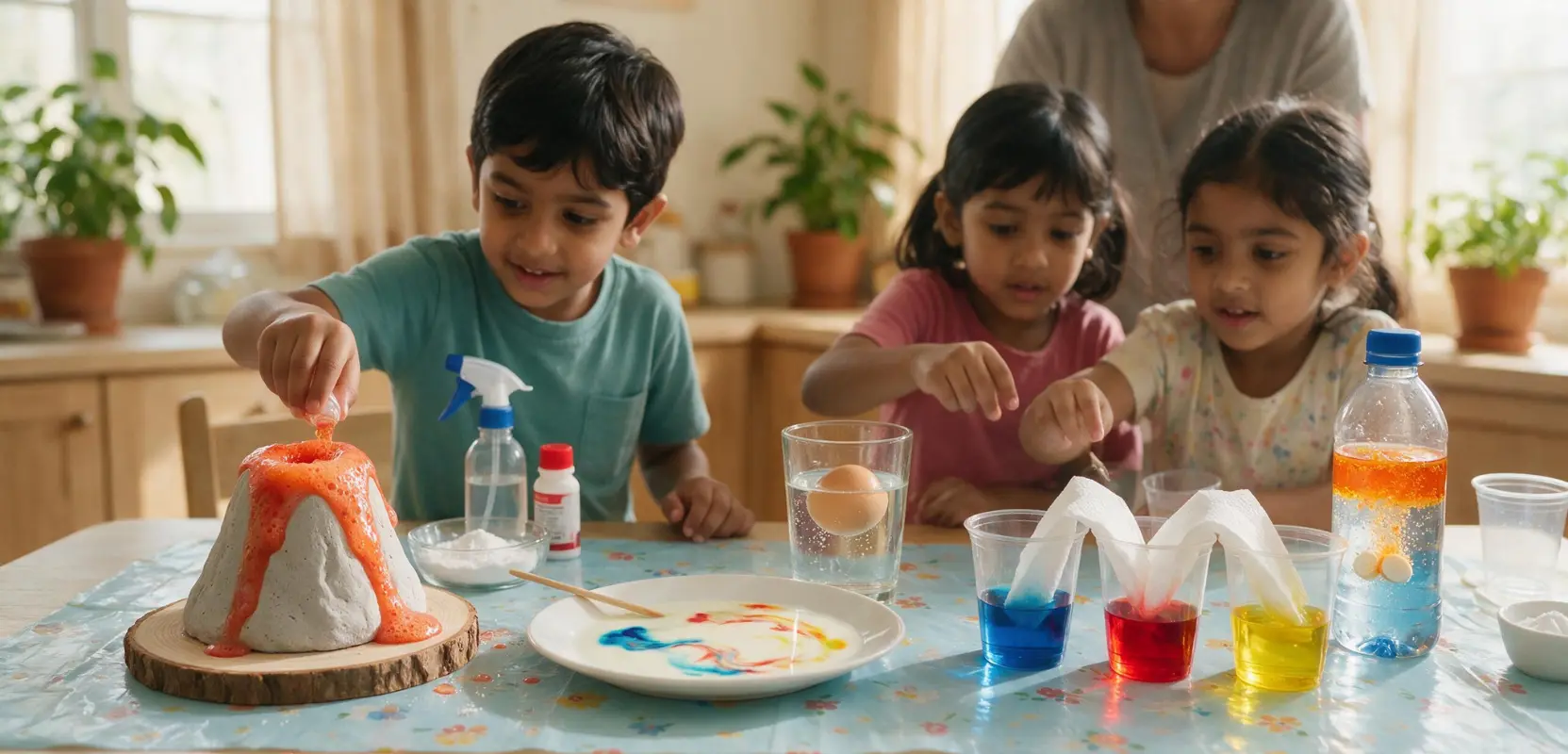
Leave the lab coat behind. Leave the goggles that gather dust in a drawer. The best science experiments for kids can be performed with items that already sit in your kitchen: vinegar, dish soap, an egg, and a splash of food coloring. That is all. Give a child something that fizzes, foams, or floats when it should not. You will hold their attention longer than any worksheet could ever hold.
At The Little Scholar, parents ask the question almost every week. What can I do with my child this weekend that does not involve a screen? The honest answer is simple: a kitchen counter and twenty spare minutes can do more than you imagine.
Easy science experiments for kids at home do not need a chemistry set shipped from somewhere. Science experiments need curiosity, a touch of supervision, and a parent willing to let the counter become a little messy. I have seen parents and kids create wonder in the kitchen, and the results are always surprising.
Eight picks below. Each pick is. Each pick is backed by real science. A kid can actually follow each pick once that kid sees it happen in front of them.
8 Simple Experiments to Try This Weekend
Cheap materials are the foundation of every project I love. Quick setup is the secret that makes the work feel almost instant. Science underneath every single time reminds me that the universe is always listening. None of these experiments take more than 15 to 20 minutes, and most require only two or three objects from around the house.
1. Baking Soda and Vinegar Volcano
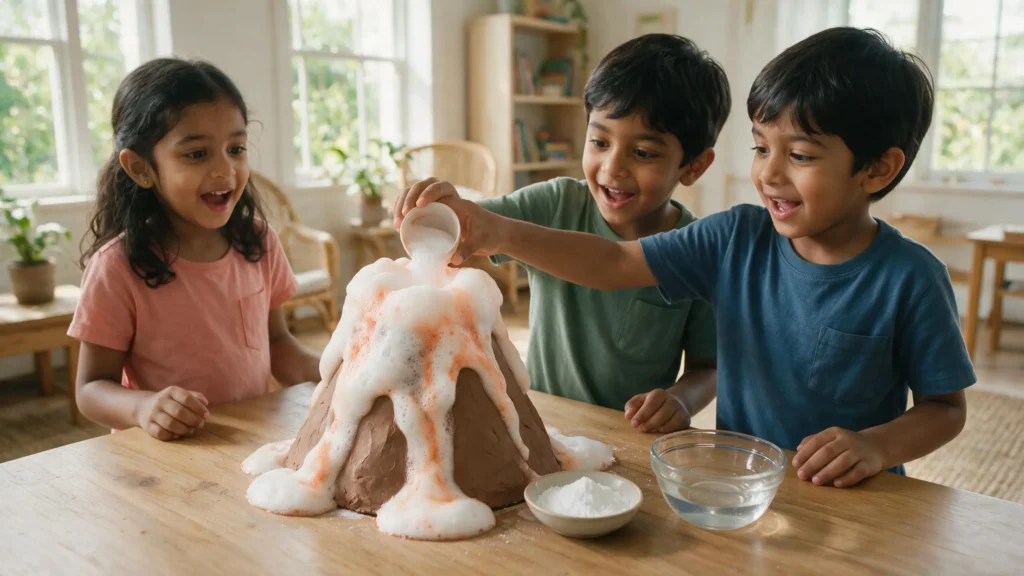
You will need baking soda, vinegar, food coloring, a small cup, and clay or papier mache for the cone.
Every child tries this experiment at some time. The reason is clear. When baking soda mixes with vinegar, an acid‑base reaction begins, making carbon dioxide gas fast. The bubbles hurry to escape, pushing liquid up and splashing in an eruption.
Shape a cone from clay around the cup, and add a drop of orange food coloring for visual effect. Then step back. This experiment is one of the requested science experiments for children because the result is instant, loud, and never feels old.
2. Elephant Toothpaste Experiment
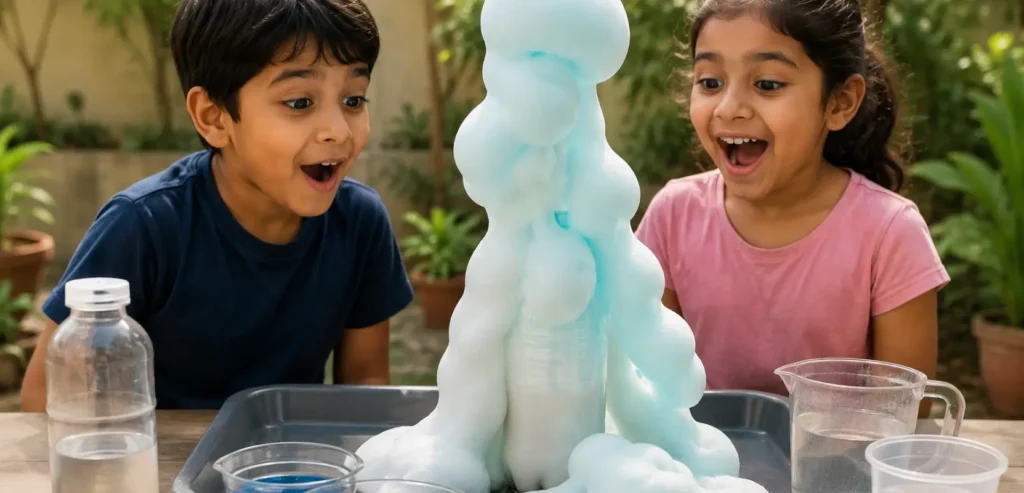
You will need hydrogen peroxide, dish soap, dry yeast, warm water, and a plastic bottle.
The name says it all, really. A tube of foam shoots out like something an elephant squeezed. Mix hydrogen peroxide with dish soap and warm water in a bottle, then stir in yeast dissolved in water as your catalyst.
Here’s the kicker. The yeast doesn’t get used up. It just speeds up the breakdown of hydrogen peroxide into water and oxygen, and the soap traps that oxygen as foam. Because the reaction gives off heat, the foam actually comes out warm to the touch. That’s the whole idea behind a catalyst in one sentence. Do this one outside, or over a tray you don’t mind ruining. The foam does not stay small.
3. Magic Milk Experiment
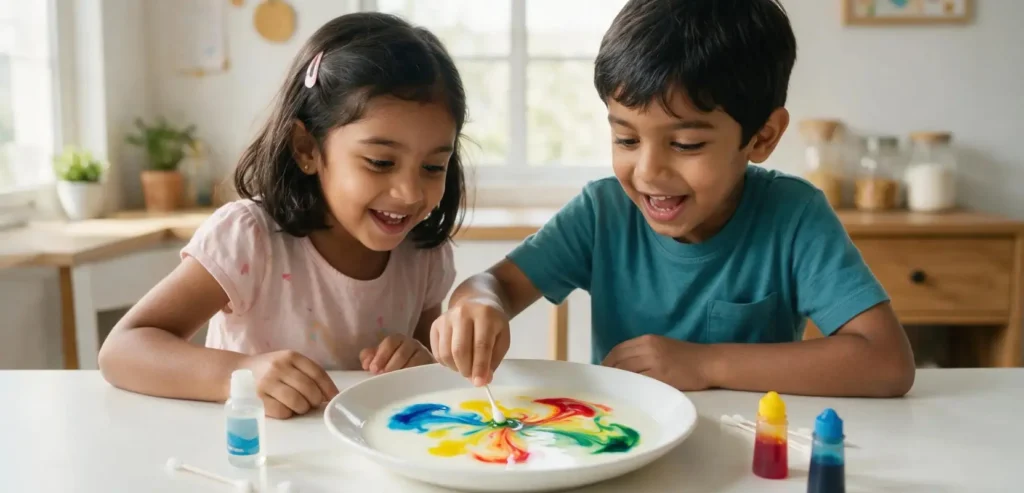
You will need milk, food coloring, dish soap, a cotton swab, and a shallow dish.
Pour milk into a dish. Drop in the colors. Then touch a soap-dipped cotton swab to the surface. Do not stir the milk. The food coloring will just take off on its own. The food coloring will swirl around like something alive.
It comes down to fat and surface tension. Milk holds fat molecules together through tension on the surface. Soap is a surfactant, and it breaks that tension apart, attacking the fat and sending it scattering, dragging the color along with it. Whole milk works best because there’s more fat to react with. Skim milk barely twitches.
4. Rainbow Walking Water Experiment
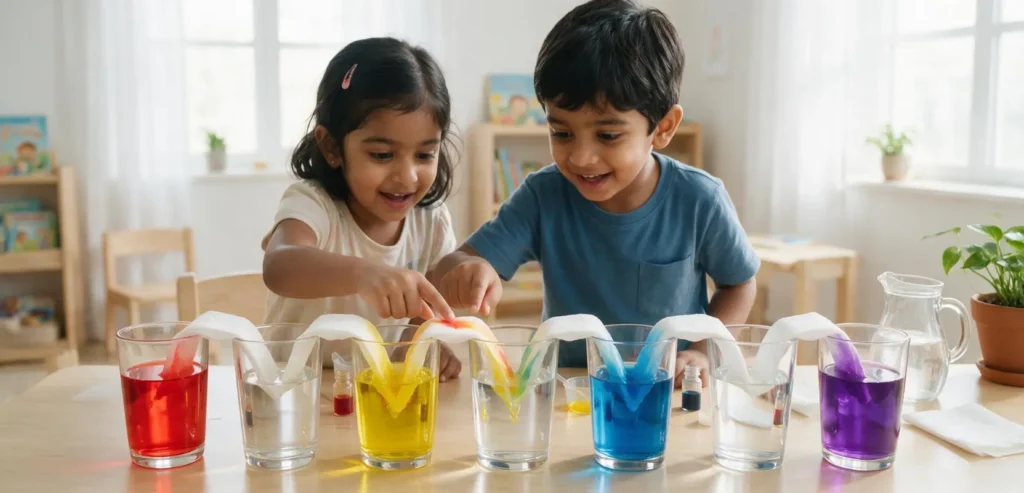
You will need seven cups, water, food coloring, and paper towels.
Lay the seven cups out in a line. Fill every cup with colored water, then place a paper towel between each pair of cups. Wait patiently. In an hour the water will climb up one side of the towel and trickle down the other side, mixing the colors in the empty cups until a full rainbow stretches across the row.
This is capillary action, the same trick plant roots use to pull water upward against gravity. Tiny gaps in the paper towel fibers pull water in through adhesion, and the water molecules cling to each other through cohesion, dragging more water along behind. It’s slow. But that’s the point. It’s a good one for a kid still learning that not everything worth watching happens right away.
5. Homemade Lava Lamp
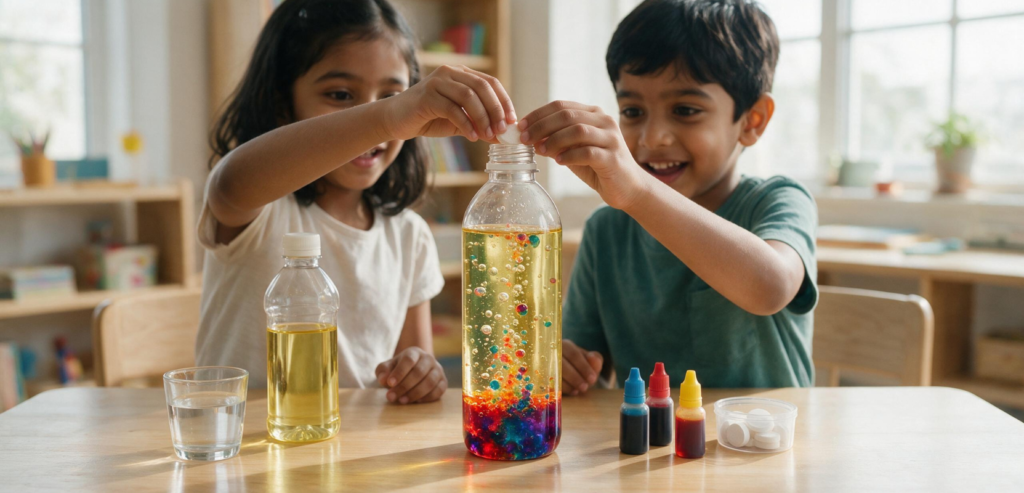
You will need a plastic bottle, vegetable oil, water, food coloring, and an effervescent tablet.
Fill a plastic bottle about two-thirds full with vegetable oil. Add water to fill the rest of the plastic bottle. Add some food coloring. Then just drop in a piece of a tablet. Watch colorful blobs rise and sink through the oil, over and over.
Oil and water refuse to mix. Different densities, different molecular structures, one polar and one not. The tablet reacts with the water and throws off carbon dioxide gas, and those bubbles grab colored water blobs and haul them up through the oil. Once a bubble pops at the top, the blob loses its lift and drops back down. Repeat until the tablet runs dry.
6. DIY Slime Experiment
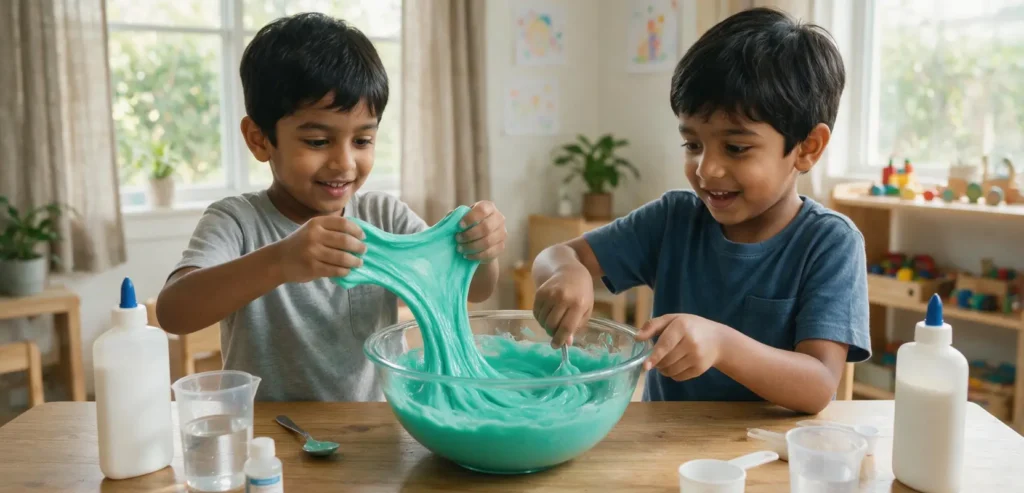
You will need white school glue, water, borax or a saline solution alternative, and a mixing bowl.
Mix white school glue with water. Then slowly stir in borax solution or a saline alternative if you would rather skip borax entirely. Keep stirring until the mixture pulls away from the bowl and turns stretchy. I find it helpful to watch the mixture change as it becomes stretchy.
Glue is a polymer. Long chains of molecules sliding past each other, loose and free. Borax cross-links those chains into a network, and that’s what gives slime its stretch and its slow, gooey pull. Kids rarely think of this as chemistry while they’re playing with it. That’s exactly the point.
7. Floating and Sinking Egg Experiment
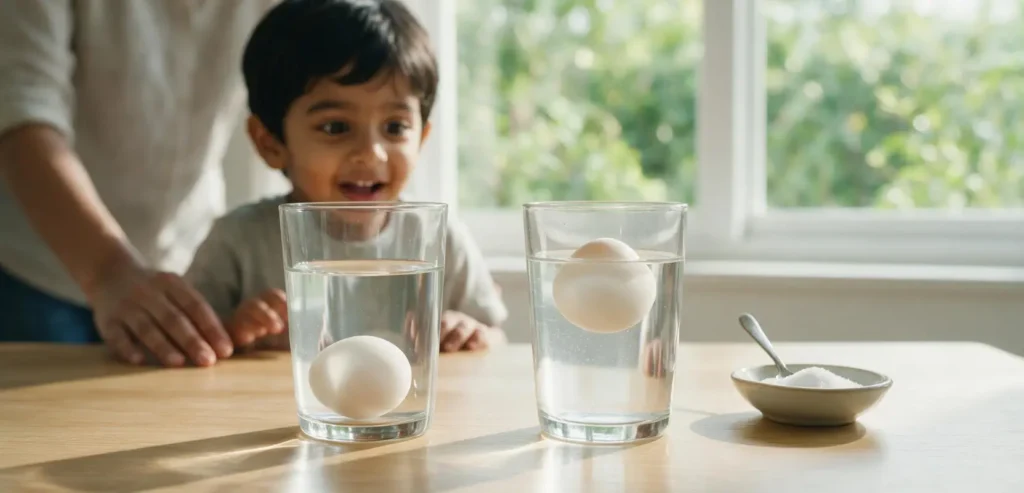
You’ll need two glasses, water, salt, and two raw eggs.
Fill one glass with plain tap water, another with water and a few tablespoons of salt stirred in. Drop an egg in each. Plain water, the egg sinks. Salt water floats.
Salt raises the density of water without adding much volume, so the water gets heavier for the same amount of space. Once the water’s denser than the egg, up it goes. It’s the same reason people float so easily in the Dead Sea. Simple to set up, and it’s one of the simplest science experiments for kids for opening a real conversation about density and buoyancy.
Also read: 10 Engaging Preschool Activities to Keep Your Little Ones Busy at Home
8. Invisible Ink with Lemon Juice
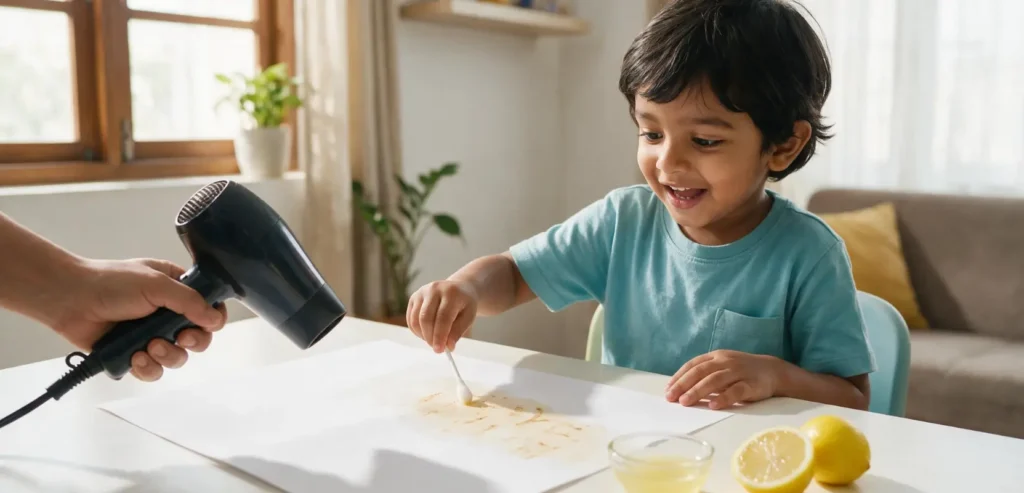
You will need lemon juice, a cotton swab or small paintbrush, plain paper, and a light bulb or hair dryer.
Dip a cotton swab in lemon juice. Write a message. Let the lemon juice dry. The writing vanishes. Hold the paper near a bulb, or have an adult run a hair dryer over the paper, and the message creeps back in light brown.
Lemon juice is acidic. This acidity weakens the paper fibers wherever the lemon juice touches. When you add heat, those weakened spots oxidize faster than the rest of the page. The weakened spots turn brown first to reveal the message. Half the fun, honestly, is the mystery of writing something nobody else can read.
.
Why These Experiments Work So Well
Each one of these science experiments for kids shares a few things in common. Materials already at home. Under half an hour, start to finish. And a 5-6-year-old can genuinely follow, not just watch and forget, by dinner.
Kids remember what kids do more than what kids are told. A textbook sentence about density does not stick the way a floating egg does. A paragraph about action means nothing to a rainbow physically climbing up a paper towel in front of you.
Watching a reaction makes the kid guess what will happen next. Then the kid checks that guess against what really happens. That is the loop that real scientists use. The kid has practiced a hypothesis, a test, and a conclusion even if nobody in the room used those words. The hypothesis was that the egg would float, and the experiment confirmed that the egg would float. Younger kids will need hands‑on help with pouring and mixing. Older kids can usually run the steps themselves with an adult close by for anything involving heat or borax.
A Few Safety Basics to Consider
- Avoid Heat (Elephant Toothpaste): Keep kids away from anything. Keep kids away from the foam in the elephant toothpaste experiment after it reacts because the reaction gives off heat and comes out warm.
- Adults Operate the Hair Dryer (Invisible Ink): Keep kids from the hair dryer step in the invisible ink experiment. Adults should be the ones to use the hair dryer or light bulb over the paper.
- No Direct Borax Handling (DIY Slime): If you are using the Borax recipe for slime (of the saline alternative), do not let kids handle Borax directly.
- Prep for the Mess: Work over a tray or a surface that wipes clean. While most of it washes off with water, preparing for the mess (for expanding reactions like the Elephant Toothpaste) saves a headache later.
- Adjust Supervision by Age: Younger kids need hands-on help with pouring and mixing. Older kids can run the steps themselves. Must have an adult close by for anything involving heat or borax.
FAQs
Almost all the experiments mentioned here can easily be performed at the school, especially the Floating Egg and Rainbow Walking Water, which are science experiments for kids at home and school. Kids at The Little Scholar community love to repeat these science experiments. Both science experiments use kitchen items and need no special equipment.
All eight science experiments are great for this age group. They show reactions and basic science that a 5-7-year-old can genuinely follow. Younger children will need hands‑on help with pouring and mixing.
The Baking Soda Volcano, Magic Milk, Rainbow Walking Water, Homemade Lava Lamp, and Floating Egg are science experiments for kids. These science experiments avoid heat, such as Elephant Toothpaste and Invisible Ink. Avoid direct chemical handling, such as borax, in slime, which the article warns about.